Share with a co-worker

The Challenge
Hydrostatic high pressure testing is critical for validating the integrity and reliability of components that contain pressure, from wellhead valves to subsea tie backs, blowout preventers, and umbilical connected assemblies. These tests confirm that systems can safely withstand operating pressures and prevent uncontrolled leakage of oil or gas.
Despite their importance, the evaluation of test quality often relied on manual interpretation. Engineers could confirm a test after the fact, but lacked a standardized way to define what a “good” test looked like or detect deviations as they occurred. This created risk, delayed responses, and limited the ability to act proactively.
- No standardized definition of a good high pressure test profile
- Manual review required to validate test quality
- Limited real time visibility into deviations during testing
- Increased risk exposure if anomalies went unnoticed
The Approach
The team transformed high pressure testing from a retrospective validation step into a monitored, data driven process.
- Good test identification: Historical data from previous months was analyzed to isolate high quality test executions.
- Contextual data integration: Information from multiple field sources was combined to ensure accurate identification of valid tests.
- Similarity analysis: Weighted similarity search was used to find tests with matching high-quality profiles.
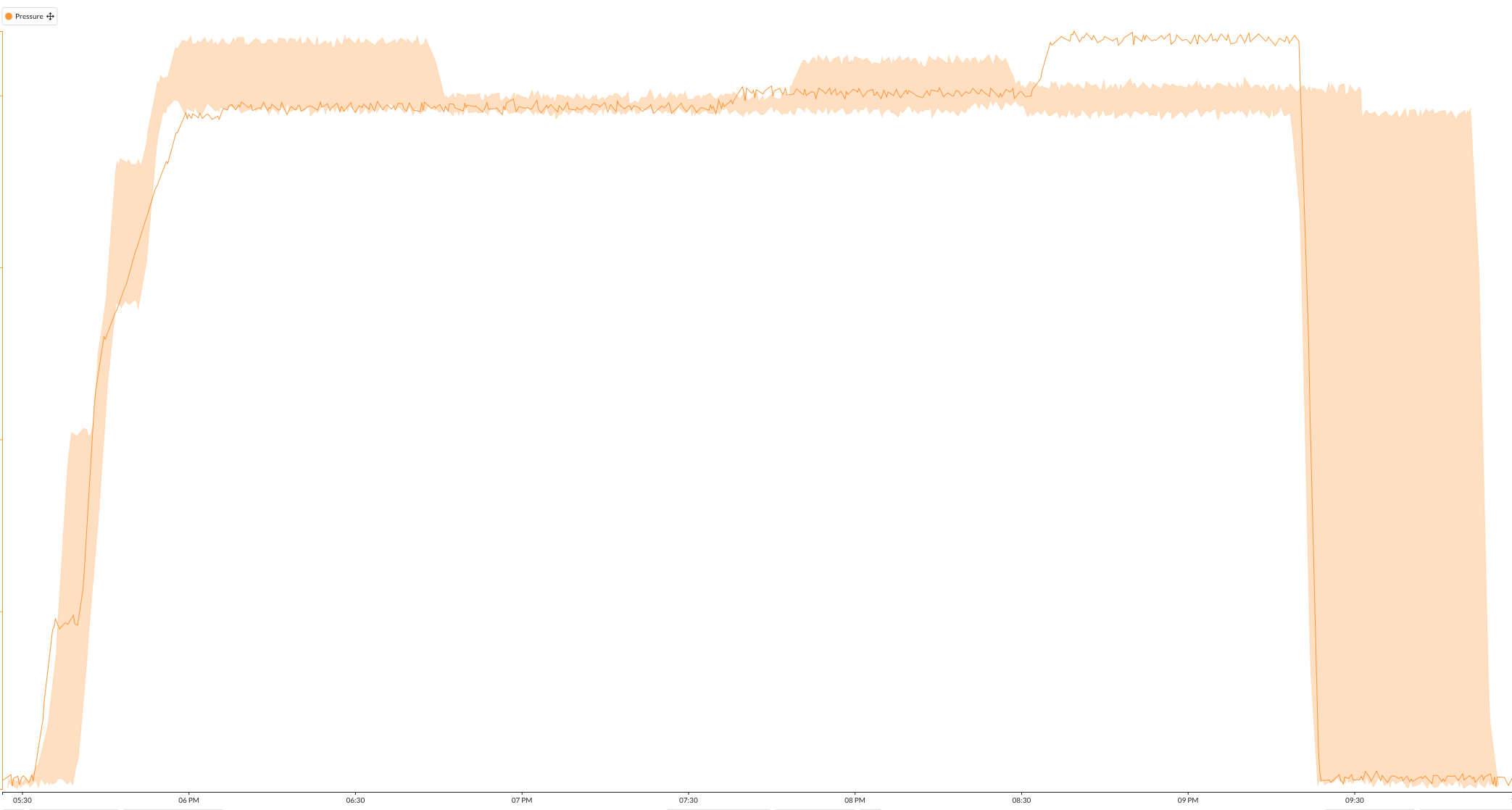
- Best test fingerprint: A reference profile representing optimal test behavior was generated.
- Real time fingerprint monitoring: A monitor was activated to compare live tests against the best profile and detect deviations instantly.
- Operator visualization: A visual tool provided clear comparison between ongoing tests and the ideal reference pattern.
Key Insight
Once a reliable fingerprint of a successful high-pressure test was established, test validation could shift from manual interpretation to automated monitoring, enabling earlier detection of abnormal behavior.
The Results
The Takeaway
By enabling self service modeling of good high pressure tests and automatic detection of deviations, the team improved test reliability, reduced risk exposure, and ensured that integrity verification became a continuous assurance process rather than a delayed validation step.
The Challenge
Hydrostatic high pressure testing is critical for validating the integrity and reliability of components that contain pressure, from wellhead valves to subsea tie backs, blowout preventers, and umbilical connected assemblies. These tests confirm that systems can safely withstand operating pressures and prevent uncontrolled leakage of oil or gas.
Despite their importance, the evaluation of test quality often relied on manual interpretation. Engineers could confirm a test after the fact, but lacked a standardized way to define what a “good” test looked like or detect deviations as they occurred. This created risk, delayed responses, and limited the ability to act proactively.
- No standardized definition of a good high pressure test profile
- Manual review required to validate test quality
- Limited real time visibility into deviations during testing
- Increased risk exposure if anomalies went unnoticed
The Approach
The team transformed high pressure testing from a retrospective validation step into a monitored, data driven process.
- Good test identification: Historical data from previous months was analyzed to isolate high quality test executions.
- Contextual data integration: Information from multiple field sources was combined to ensure accurate identification of valid tests.
- Similarity analysis: Weighted similarity search was used to find tests with matching high-quality profiles.
- Best test fingerprint: A reference profile representing optimal test behavior was generated.
- Real time fingerprint monitoring: A monitor was activated to compare live tests against the best profile and detect deviations instantly.
- Operator visualization: A visual tool provided clear comparison between ongoing tests and the ideal reference pattern.
Key Insight
Once a reliable fingerprint of a successful high-pressure test was established, test validation could shift from manual interpretation to automated monitoring, enabling earlier detection of abnormal behavior.
The Results
The Takeaway
By enabling self service modeling of good high pressure tests and automatic detection of deviations, the team improved test reliability, reduced risk exposure, and ensured that integrity verification became a continuous assurance process rather than a delayed validation step.
Access now
Share with a co-worker
The Challenge
Hydrostatic high pressure testing is critical for validating the integrity and reliability of components that contain pressure, from wellhead valves to subsea tie backs, blowout preventers, and umbilical connected assemblies. These tests confirm that systems can safely withstand operating pressures and prevent uncontrolled leakage of oil or gas.
Despite their importance, the evaluation of test quality often relied on manual interpretation. Engineers could confirm a test after the fact, but lacked a standardized way to define what a “good” test looked like or detect deviations as they occurred. This created risk, delayed responses, and limited the ability to act proactively.
- No standardized definition of a good high pressure test profile
- Manual review required to validate test quality
- Limited real time visibility into deviations during testing
- Increased risk exposure if anomalies went unnoticed
The Approach
The team transformed high pressure testing from a retrospective validation step into a monitored, data driven process.
- Good test identification: Historical data from previous months was analyzed to isolate high quality test executions.
- Contextual data integration: Information from multiple field sources was combined to ensure accurate identification of valid tests.
- Similarity analysis: Weighted similarity search was used to find tests with matching high-quality profiles.
- Best test fingerprint: A reference profile representing optimal test behavior was generated.
- Real time fingerprint monitoring: A monitor was activated to compare live tests against the best profile and detect deviations instantly.
- Operator visualization: A visual tool provided clear comparison between ongoing tests and the ideal reference pattern.
Key Insight
Once a reliable fingerprint of a successful high-pressure test was established, test validation could shift from manual interpretation to automated monitoring, enabling earlier detection of abnormal behavior.
The Results
The Takeaway
By enabling self service modeling of good high pressure tests and automatic detection of deviations, the team improved test reliability, reduced risk exposure, and ensured that integrity verification became a continuous assurance process rather than a delayed validation step.
Access now
Subscribe to our newsletter
Stay up to date with our latest news and updates.
Webinars on Demand
Press Play on Operational Improvement
.jpeg)
.jpeg)
.jpeg)
Other Resources
Explore Our Newest Content to Maximize Your Operational Efficiency