Share with a co-worker
All Resources
Use case

The Challenge
The stripper column level had been unstable for some time. Sudden increases and decreases triggered the advanced control system to intervene aggressively, disturbing overall production to stabilize column variables. What initially seemed like random oscillations were repeatedly affecting throughput and operational confidence.
The team needed to understand why these abrupt level shifts were occurring and whether they were linked to specific operating conditions or system changes.
- Sudden stripper level fluctuations
- Advanced control interventions impacting production
- No clear trigger identified
- Ongoing operational instability
The Approach
Engineers structured the investigation using data-driven filtering and variance analysis.
- Production filtering: Non-production periods were removed to focus only on relevant operating conditions
- Variance calculation: An aggregated formula tag was created to quantify stripper level variability
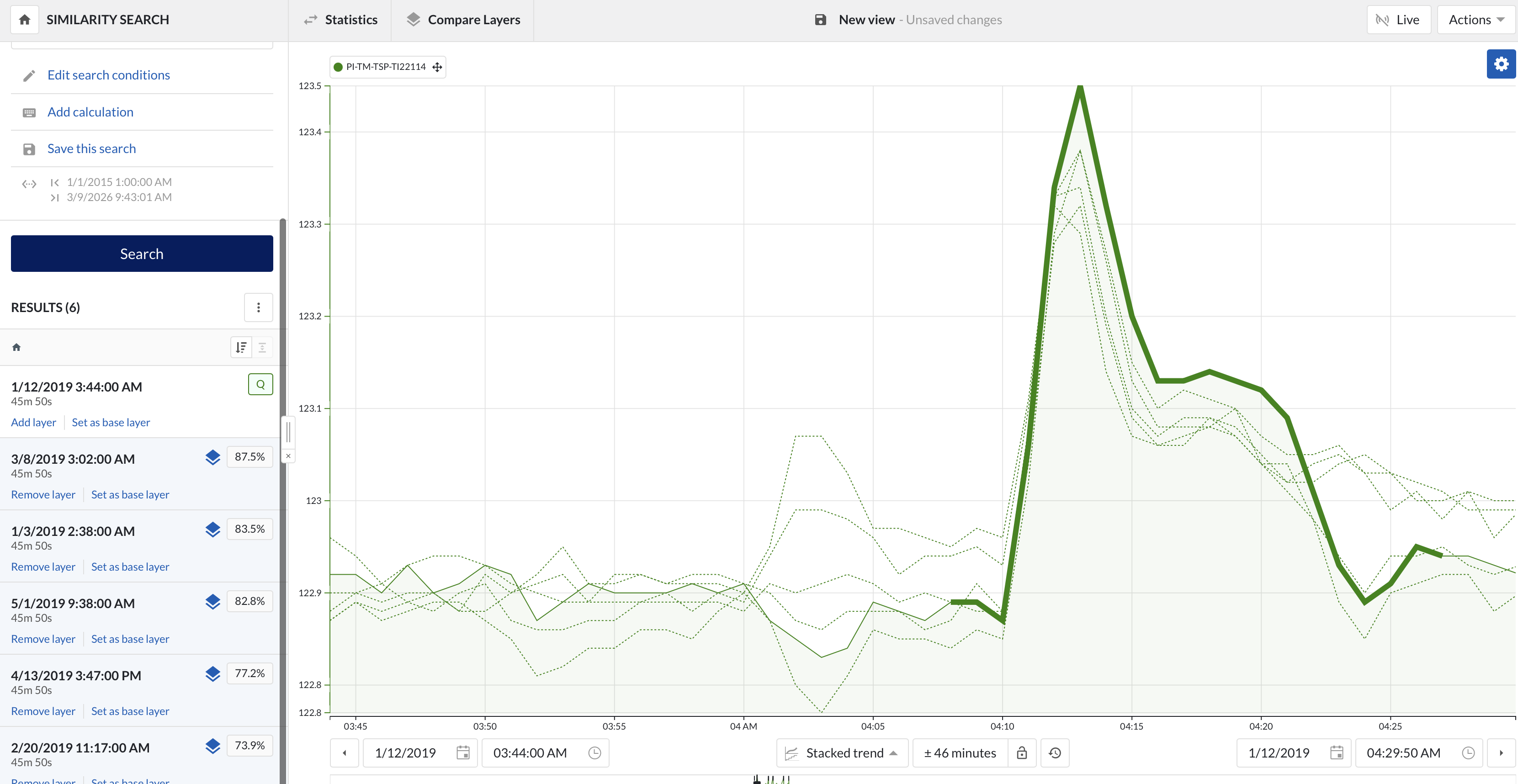
- Event search: Periods with similar variance patterns were identified across historical data
- Change correlation: Analysis revealed that instability began after a process control unit upgrade
- Influence factor identification: Temperature and reflux flow were identified as key drivers affecting level behavior
Key Insight
The instability was not random, it was linked to specific process variables and coincided with a control system upgrade.
Results
The Takeaway
By isolating the drivers of stripper level instability, the team regained control over column behavior, reduced unnecessary control interventions, and improved production stability through targeted parameter optimization.
The Challenge
The stripper column level had been unstable for some time. Sudden increases and decreases triggered the advanced control system to intervene aggressively, disturbing overall production to stabilize column variables. What initially seemed like random oscillations were repeatedly affecting throughput and operational confidence.
The team needed to understand why these abrupt level shifts were occurring and whether they were linked to specific operating conditions or system changes.
- Sudden stripper level fluctuations
- Advanced control interventions impacting production
- No clear trigger identified
- Ongoing operational instability
The Approach
Engineers structured the investigation using data-driven filtering and variance analysis.
- Production filtering: Non-production periods were removed to focus only on relevant operating conditions
- Variance calculation: An aggregated formula tag was created to quantify stripper level variability
- Event search: Periods with similar variance patterns were identified across historical data
- Change correlation: Analysis revealed that instability began after a process control unit upgrade
- Influence factor identification: Temperature and reflux flow were identified as key drivers affecting level behavior
Key Insight
The instability was not random, it was linked to specific process variables and coincided with a control system upgrade.
Results
The Takeaway
By isolating the drivers of stripper level instability, the team regained control over column behavior, reduced unnecessary control interventions, and improved production stability through targeted parameter optimization.
Access now
Share with a co-worker
The Challenge
The stripper column level had been unstable for some time. Sudden increases and decreases triggered the advanced control system to intervene aggressively, disturbing overall production to stabilize column variables. What initially seemed like random oscillations were repeatedly affecting throughput and operational confidence.
The team needed to understand why these abrupt level shifts were occurring and whether they were linked to specific operating conditions or system changes.
- Sudden stripper level fluctuations
- Advanced control interventions impacting production
- No clear trigger identified
- Ongoing operational instability
The Approach
Engineers structured the investigation using data-driven filtering and variance analysis.
- Production filtering: Non-production periods were removed to focus only on relevant operating conditions
- Variance calculation: An aggregated formula tag was created to quantify stripper level variability
- Event search: Periods with similar variance patterns were identified across historical data
- Change correlation: Analysis revealed that instability began after a process control unit upgrade
- Influence factor identification: Temperature and reflux flow were identified as key drivers affecting level behavior
Key Insight
The instability was not random, it was linked to specific process variables and coincided with a control system upgrade.
Results
The Takeaway
By isolating the drivers of stripper level instability, the team regained control over column behavior, reduced unnecessary control interventions, and improved production stability through targeted parameter optimization.
Access now
Subscribe to our newsletter
Stay up to date with our latest news and updates.
Webinars on Demand
Press Play on Operational Improvement
.jpeg)
.jpeg)
.jpeg)
Other Resources
Explore Our Newest Content to Maximize Your Operational Efficiency