Share with a co-worker
All Resources
Use case

The Challenge
Plant-level KPIs revealed that gas plant throughput had declined over the previous month. Both central operations and plant management noticed recurring issues in one critical area, the sales gas compressors. Trips had become more frequent, and a task force of process and reliability engineers was assigned to investigate.
At the same time, operators reported an additional trip in one of the three compressors, confirming that the issue was ongoing and potentially escalating. The team needed to determine whether these trips were isolated incidents or symptoms of a systemic failure mechanism.
- Throughput decline detected at plant level
- Increasing compressor trips over recent weeks
- Unclear root cause across multiple assets
- Risk of continued production losses if unresolved
The Approach
Engineers combined KPI-driven investigation with advanced pattern analysis to isolate the failure mechanism and prevent recurrence.
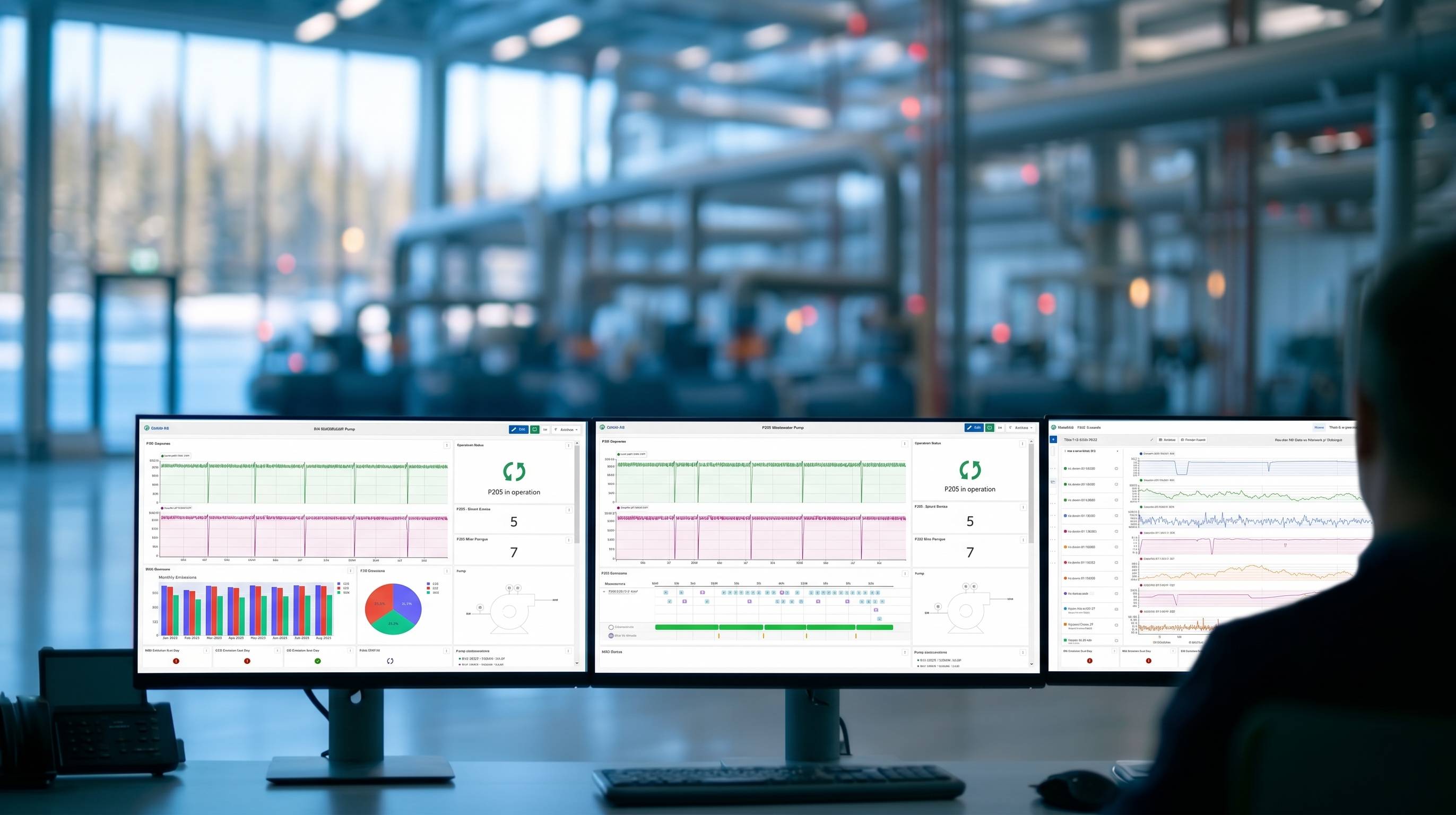
- KPI-first diagnostics: Global dashboards were reviewed to identify abnormal performance patterns across compressors
- Event-focused analysis: Recent trip events were analyzed using recommendation engines to shortlist probable causes
- Multivariable pattern recognition: Historical trip signatures were compared to determine whether past failures shared the same root cause
- Cross-event comparison: Similar trips were layered to detect recurring behavioral fingerprints
- Proactive monitoring setup: Once the cause was identified, automated monitoring and recommendations were configured

Key Insight
Trips that initially appeared unrelated actually shared a consistent precursor pattern, indicating a common failure mechanism rather than independent faults.
Results
The Takeaway
By shifting from reactive troubleshooting to predictive diagnostics, the plant gained early visibility into compressor instability, enabled proactive intervention before trips occurred, protected throughput, and strengthened operational reliability across critical compression assets.
The Challenge
Plant-level KPIs revealed that gas plant throughput had declined over the previous month. Both central operations and plant management noticed recurring issues in one critical area, the sales gas compressors. Trips had become more frequent, and a task force of process and reliability engineers was assigned to investigate.
At the same time, operators reported an additional trip in one of the three compressors, confirming that the issue was ongoing and potentially escalating. The team needed to determine whether these trips were isolated incidents or symptoms of a systemic failure mechanism.
- Throughput decline detected at plant level
- Increasing compressor trips over recent weeks
- Unclear root cause across multiple assets
- Risk of continued production losses if unresolved
The Approach
Engineers combined KPI-driven investigation with advanced pattern analysis to isolate the failure mechanism and prevent recurrence.
- KPI-first diagnostics: Global dashboards were reviewed to identify abnormal performance patterns across compressors
- Event-focused analysis: Recent trip events were analyzed using recommendation engines to shortlist probable causes
- Multivariable pattern recognition: Historical trip signatures were compared to determine whether past failures shared the same root cause
- Cross-event comparison: Similar trips were layered to detect recurring behavioral fingerprints
- Proactive monitoring setup: Once the cause was identified, automated monitoring and recommendations were configured
Key Insight
Trips that initially appeared unrelated actually shared a consistent precursor pattern, indicating a common failure mechanism rather than independent faults.
Results
The Takeaway
By shifting from reactive troubleshooting to predictive diagnostics, the plant gained early visibility into compressor instability, enabled proactive intervention before trips occurred, protected throughput, and strengthened operational reliability across critical compression assets.
Access now
Share with a co-worker
The Challenge
Plant-level KPIs revealed that gas plant throughput had declined over the previous month. Both central operations and plant management noticed recurring issues in one critical area, the sales gas compressors. Trips had become more frequent, and a task force of process and reliability engineers was assigned to investigate.
At the same time, operators reported an additional trip in one of the three compressors, confirming that the issue was ongoing and potentially escalating. The team needed to determine whether these trips were isolated incidents or symptoms of a systemic failure mechanism.
- Throughput decline detected at plant level
- Increasing compressor trips over recent weeks
- Unclear root cause across multiple assets
- Risk of continued production losses if unresolved
The Approach
Engineers combined KPI-driven investigation with advanced pattern analysis to isolate the failure mechanism and prevent recurrence.
- KPI-first diagnostics: Global dashboards were reviewed to identify abnormal performance patterns across compressors
- Event-focused analysis: Recent trip events were analyzed using recommendation engines to shortlist probable causes
- Multivariable pattern recognition: Historical trip signatures were compared to determine whether past failures shared the same root cause
- Cross-event comparison: Similar trips were layered to detect recurring behavioral fingerprints
- Proactive monitoring setup: Once the cause was identified, automated monitoring and recommendations were configured
Key Insight
Trips that initially appeared unrelated actually shared a consistent precursor pattern, indicating a common failure mechanism rather than independent faults.
Results
The Takeaway
By shifting from reactive troubleshooting to predictive diagnostics, the plant gained early visibility into compressor instability, enabled proactive intervention before trips occurred, protected throughput, and strengthened operational reliability across critical compression assets.
Access now
Subscribe to our newsletter
Stay up to date with our latest news and updates.
Webinars on Demand
Press Play on Operational Improvement
.jpeg)
.jpeg)
.jpeg)
Other Resources
Explore Our Newest Content to Maximize Your Operational Efficiency