Share with a co-worker


The Challenge
Following an electrical system rework on an offshore platform, the number of compressor trips increased sharply, reaching 10 to 15 trips in a single month. Each trip meant lost production, operational disruption, and reactive maintenance under time pressure.
The problem was not just the trips themselves, it was the lack of early visibility. By the time a compressor tripped, operators had no opportunity to prepare work orders, stage materials, or intervene before shutdown occurred.
- Frequent compressor trips impacting production continuity
- No early warning of trip probability
- Reactive maintenance instead of planned intervention
- Limited visibility into root causes behind recurring trips
The Approach
The team implemented a monitoring and analytics framework to uncover the root causes of trips and predict them before they occurred.
- Pattern recognition analysis: Trip events were analyzed using gas flow signals and historical overlays of similar trip patterns
- Statistical comparison: Trip periods were compared against normal operating windows to test hypotheses and isolate abnormal behaviors
- Root cause identification: Analysis revealed erratic and drifting valve behavior occurring hours before compressor trips
- Predictive monitoring: A monitor was configured to detect early signs of this abnormal valve behavior and alert process experts in advance
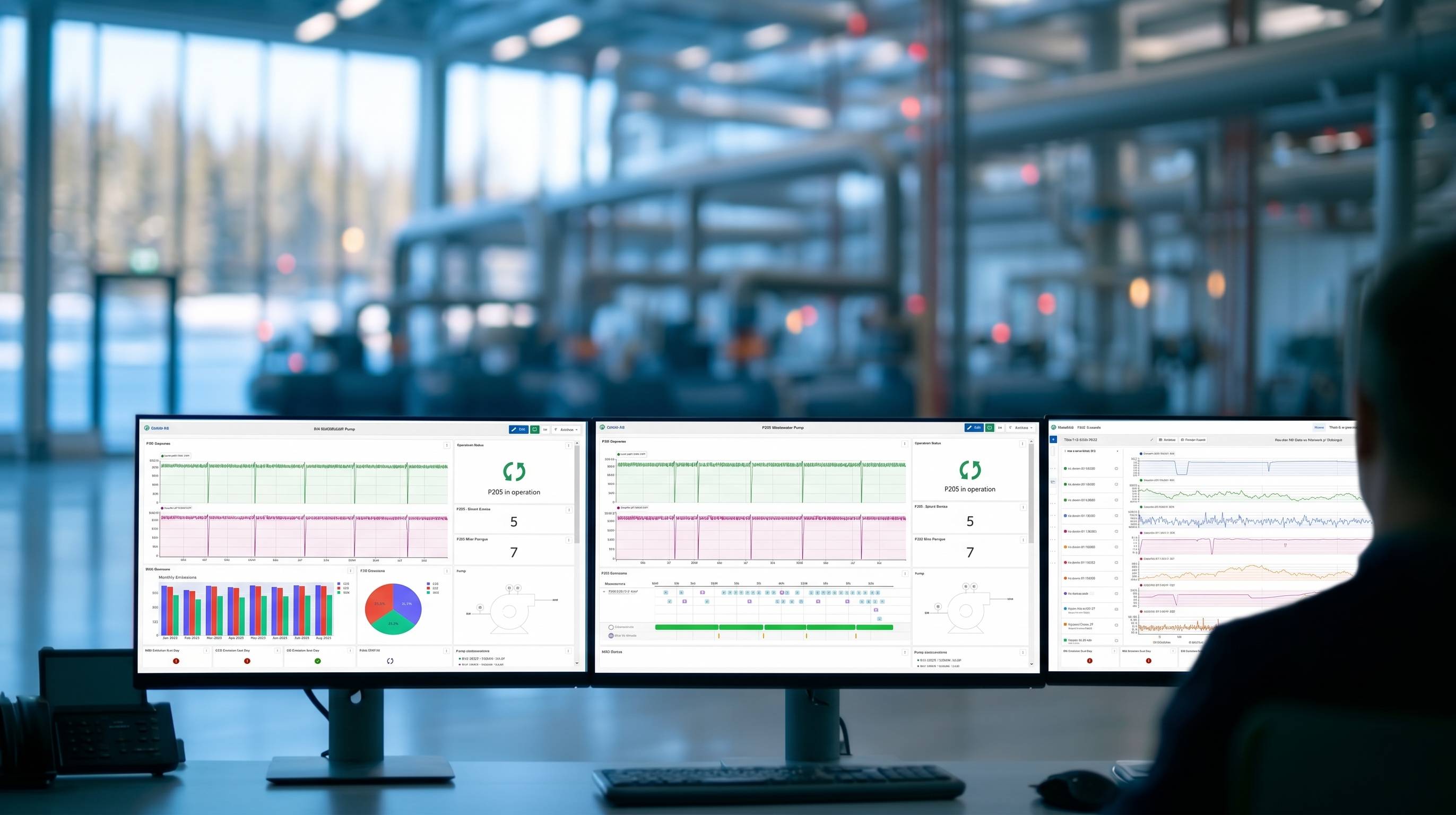
- Operator dashboard integration: Monitoring outputs were automatically sent to a visualization dashboard showing compressor trips and precursors in timeline format

Key Insight
Compressor trips were not sudden failures, they were preceded by measurable signal patterns. Once those precursors were identified, trips could be anticipated hours in advance.
Results
The Takeaway
By converting compressor trips from unpredictable failures into detectable events, the team enabled proactive intervention, reduced unplanned downtime, and gave operations the time needed to prepare maintenance actions before shutdown occurred.
The Challenge
Following an electrical system rework on an offshore platform, the number of compressor trips increased sharply, reaching 10 to 15 trips in a single month. Each trip meant lost production, operational disruption, and reactive maintenance under time pressure.
The problem was not just the trips themselves, it was the lack of early visibility. By the time a compressor tripped, operators had no opportunity to prepare work orders, stage materials, or intervene before shutdown occurred.
- Frequent compressor trips impacting production continuity
- No early warning of trip probability
- Reactive maintenance instead of planned intervention
- Limited visibility into root causes behind recurring trips
The Approach
The team implemented a monitoring and analytics framework to uncover the root causes of trips and predict them before they occurred.
- Pattern recognition analysis: Trip events were analyzed using gas flow signals and historical overlays of similar trip patterns
- Statistical comparison: Trip periods were compared against normal operating windows to test hypotheses and isolate abnormal behaviors
- Root cause identification: Analysis revealed erratic and drifting valve behavior occurring hours before compressor trips
- Predictive monitoring: A monitor was configured to detect early signs of this abnormal valve behavior and alert process experts in advance
- Operator dashboard integration: Monitoring outputs were automatically sent to a visualization dashboard showing compressor trips and precursors in timeline format
Key Insight
Compressor trips were not sudden failures, they were preceded by measurable signal patterns. Once those precursors were identified, trips could be anticipated hours in advance.
Results
The Takeaway
By converting compressor trips from unpredictable failures into detectable events, the team enabled proactive intervention, reduced unplanned downtime, and gave operations the time needed to prepare maintenance actions before shutdown occurred.
Access now
Share with a co-worker
The Challenge
Following an electrical system rework on an offshore platform, the number of compressor trips increased sharply, reaching 10 to 15 trips in a single month. Each trip meant lost production, operational disruption, and reactive maintenance under time pressure.
The problem was not just the trips themselves, it was the lack of early visibility. By the time a compressor tripped, operators had no opportunity to prepare work orders, stage materials, or intervene before shutdown occurred.
- Frequent compressor trips impacting production continuity
- No early warning of trip probability
- Reactive maintenance instead of planned intervention
- Limited visibility into root causes behind recurring trips
The Approach
The team implemented a monitoring and analytics framework to uncover the root causes of trips and predict them before they occurred.
- Pattern recognition analysis: Trip events were analyzed using gas flow signals and historical overlays of similar trip patterns
- Statistical comparison: Trip periods were compared against normal operating windows to test hypotheses and isolate abnormal behaviors
- Root cause identification: Analysis revealed erratic and drifting valve behavior occurring hours before compressor trips
- Predictive monitoring: A monitor was configured to detect early signs of this abnormal valve behavior and alert process experts in advance
- Operator dashboard integration: Monitoring outputs were automatically sent to a visualization dashboard showing compressor trips and precursors in timeline format
Key Insight
Compressor trips were not sudden failures, they were preceded by measurable signal patterns. Once those precursors were identified, trips could be anticipated hours in advance.
Results
The Takeaway
By converting compressor trips from unpredictable failures into detectable events, the team enabled proactive intervention, reduced unplanned downtime, and gave operations the time needed to prepare maintenance actions before shutdown occurred.
Access now
Subscribe to our newsletter
Stay up to date with our latest news and updates.
Webinars on Demand
Press Play on Operational Improvement
.jpeg)
.jpeg)
.jpeg)
Other Resources
Explore Our Newest Content to Maximize Your Operational Efficiency