Share with a co-worker
All Resources
Use case


The Challenge
Mechanical seals are critical components in rotating equipment, especially across oil and gas operations, where they ensure containment integrity and safe process conditions. When seals fail, the consequences can escalate quickly: leaks, safety risks, environmental exposure, production losses, and unplanned shutdowns.
Despite their importance, seal health is often difficult to assess in real time. Without continuous monitoring, early degradation can go unnoticed until failure occurs. This reactive approach increases the likelihood of emergency maintenance, shortens seal lifespan, and raises operational costs.
- High safety and environmental risk if seals fail
- Limited real-time visibility into seal condition
- Unexpected failures causing downtime and maintenance emergencies
- Reduced seal lifetime and higher replacement costs
The Approach
The team implemented a preventive monitoring framework designed to track seal condition continuously and alert operators before issues escalated.
- Continuous condition tracking: Operational parameters related to seal performance were monitored in real time
- Threshold definition: Limits for undesirable pressure changes were established to detect early warning signs
- Automated alerting: Live monitors were configured to flag anomalies as soon as abnormal behavior appeared
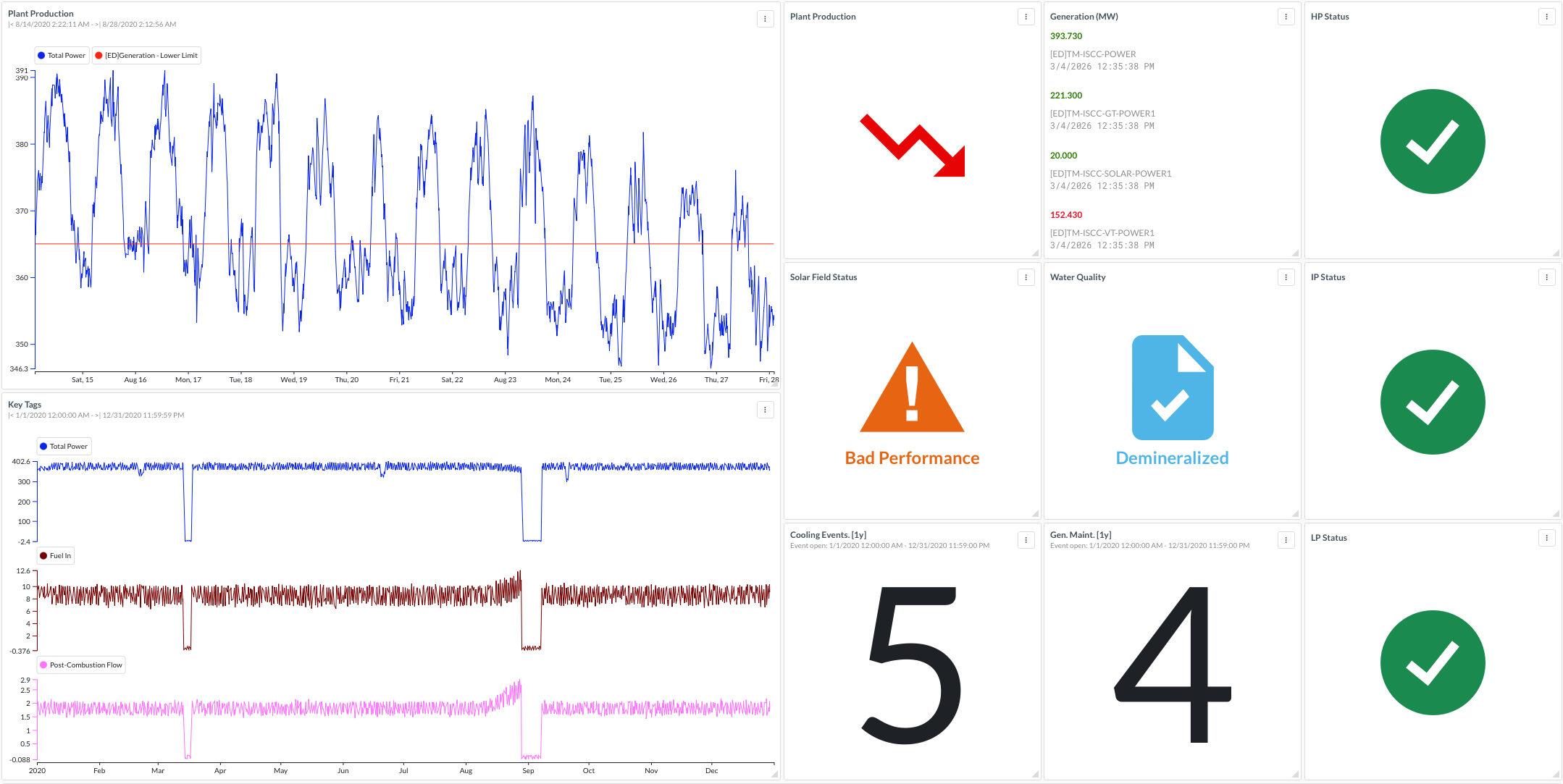
- Centralized dashboards: A real-time visualization panel displayed seal status across assets for immediate awareness
- Predictive maintenance enablement: Maintenance teams used live data to schedule interventions proactively rather than reactively
Key Insight
Seal failures rarely occur without warning, subtle pressure deviations often precede them. Once these early signals were monitored systematically, failure risk became manageable rather than unpredictable.
Results
The Takeaway
By transforming mechanical seal monitoring into a real-time preventive system, the operation reduced risk exposure, avoided unexpected failures, and improved reliability, achieving measurable cost savings while strengthening safety and environmental performance.
The Challenge
Mechanical seals are critical components in rotating equipment, especially across oil and gas operations, where they ensure containment integrity and safe process conditions. When seals fail, the consequences can escalate quickly: leaks, safety risks, environmental exposure, production losses, and unplanned shutdowns.
Despite their importance, seal health is often difficult to assess in real time. Without continuous monitoring, early degradation can go unnoticed until failure occurs. This reactive approach increases the likelihood of emergency maintenance, shortens seal lifespan, and raises operational costs.
- High safety and environmental risk if seals fail
- Limited real-time visibility into seal condition
- Unexpected failures causing downtime and maintenance emergencies
- Reduced seal lifetime and higher replacement costs
The Approach
The team implemented a preventive monitoring framework designed to track seal condition continuously and alert operators before issues escalated.
- Continuous condition tracking: Operational parameters related to seal performance were monitored in real time
- Threshold definition: Limits for undesirable pressure changes were established to detect early warning signs
- Automated alerting: Live monitors were configured to flag anomalies as soon as abnormal behavior appeared
- Centralized dashboards: A real-time visualization panel displayed seal status across assets for immediate awareness
- Predictive maintenance enablement: Maintenance teams used live data to schedule interventions proactively rather than reactively
Key Insight
Seal failures rarely occur without warning, subtle pressure deviations often precede them. Once these early signals were monitored systematically, failure risk became manageable rather than unpredictable.
Results
The Takeaway
By transforming mechanical seal monitoring into a real-time preventive system, the operation reduced risk exposure, avoided unexpected failures, and improved reliability, achieving measurable cost savings while strengthening safety and environmental performance.
Access now
Share with a co-worker
The Challenge
Mechanical seals are critical components in rotating equipment, especially across oil and gas operations, where they ensure containment integrity and safe process conditions. When seals fail, the consequences can escalate quickly: leaks, safety risks, environmental exposure, production losses, and unplanned shutdowns.
Despite their importance, seal health is often difficult to assess in real time. Without continuous monitoring, early degradation can go unnoticed until failure occurs. This reactive approach increases the likelihood of emergency maintenance, shortens seal lifespan, and raises operational costs.
- High safety and environmental risk if seals fail
- Limited real-time visibility into seal condition
- Unexpected failures causing downtime and maintenance emergencies
- Reduced seal lifetime and higher replacement costs
The Approach
The team implemented a preventive monitoring framework designed to track seal condition continuously and alert operators before issues escalated.
- Continuous condition tracking: Operational parameters related to seal performance were monitored in real time
- Threshold definition: Limits for undesirable pressure changes were established to detect early warning signs
- Automated alerting: Live monitors were configured to flag anomalies as soon as abnormal behavior appeared
- Centralized dashboards: A real-time visualization panel displayed seal status across assets for immediate awareness
- Predictive maintenance enablement: Maintenance teams used live data to schedule interventions proactively rather than reactively
Key Insight
Seal failures rarely occur without warning, subtle pressure deviations often precede them. Once these early signals were monitored systematically, failure risk became manageable rather than unpredictable.
Results
The Takeaway
By transforming mechanical seal monitoring into a real-time preventive system, the operation reduced risk exposure, avoided unexpected failures, and improved reliability, achieving measurable cost savings while strengthening safety and environmental performance.
Access now
Subscribe to our newsletter
Stay up to date with our latest news and updates.
Webinars on Demand
Press Play on Operational Improvement
.jpeg)
.jpeg)
.jpeg)
Other Resources
Explore Our Newest Content to Maximize Your Operational Efficiency