Share with a co-worker


The Challenge
A process column supplied with light steam faced a critical operational risk. Whenever the steam flow measurement dropped to zero, the system triggered a High-High alarm that led to automatic shutdown of the process. These shutdowns not only interrupted production but also affected overall equipment effectiveness and operational stability.
The engineering team needed to determine why the steam flow occasionally dropped and whether the cause originated in the column itself or somewhere upstream in the utility network. Without clear root cause identification, operators could only react after alarms occurred, increasing downtime risk.
- Intermittent drops in steam flow measurement
- Automatic shutdown triggered by safety logic
- Unknown origin of disturbance
- Risk of production losses and reduced OEE
The Approach
The investigation focused on comparing abnormal events against normal operating behavior to isolate the true cause quickly and reliably.
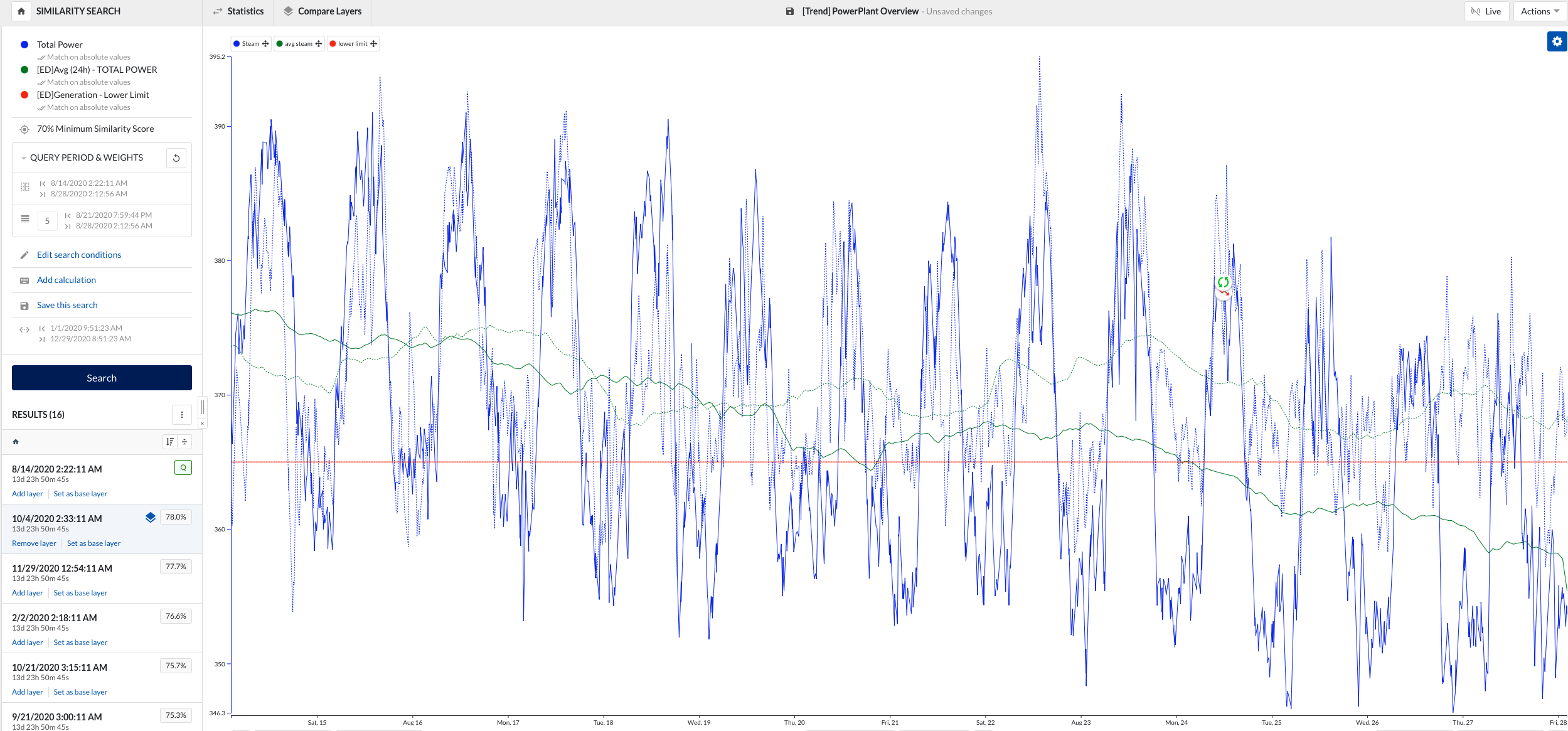
- Event comparison: Similar low-flow incidents were overlaid and analyzed against stable operation periods
- Pattern matching: Deviations were studied to detect common signatures preceding flow drops
- Root cause isolation: Analysis revealed that the issue was not inside the column but in the steam network itself
- Source confirmation: A drop in upstream steam pressure was identified as the triggering factor
- Rapid diagnostics: The full investigation required only about two hours
Key Insight
The column was not the source of instability, upstream steam pressure fluctuations were the true driver of trips.
Results
The Takeaway
By identifying the true source of the trips and enabling early detection of pressure disturbances, the plant avoided unnecessary shutdowns within the first month, improved OEE, reduced operational and maintenance costs, and strengthened overall process safety through faster response and better situational awareness.
The Challenge
A process column supplied with light steam faced a critical operational risk. Whenever the steam flow measurement dropped to zero, the system triggered a High-High alarm that led to automatic shutdown of the process. These shutdowns not only interrupted production but also affected overall equipment effectiveness and operational stability.
The engineering team needed to determine why the steam flow occasionally dropped and whether the cause originated in the column itself or somewhere upstream in the utility network. Without clear root cause identification, operators could only react after alarms occurred, increasing downtime risk.
- Intermittent drops in steam flow measurement
- Automatic shutdown triggered by safety logic
- Unknown origin of disturbance
- Risk of production losses and reduced OEE
The Approach
The investigation focused on comparing abnormal events against normal operating behavior to isolate the true cause quickly and reliably.
- Event comparison: Similar low-flow incidents were overlaid and analyzed against stable operation periods
- Pattern matching: Deviations were studied to detect common signatures preceding flow drops
- Root cause isolation: Analysis revealed that the issue was not inside the column but in the steam network itself
- Source confirmation: A drop in upstream steam pressure was identified as the triggering factor
- Rapid diagnostics: The full investigation required only about two hours
Key Insight
The column was not the source of instability, upstream steam pressure fluctuations were the true driver of trips.
Results
The Takeaway
By identifying the true source of the trips and enabling early detection of pressure disturbances, the plant avoided unnecessary shutdowns within the first month, improved OEE, reduced operational and maintenance costs, and strengthened overall process safety through faster response and better situational awareness.
Access now
Share with a co-worker
The Challenge
A process column supplied with light steam faced a critical operational risk. Whenever the steam flow measurement dropped to zero, the system triggered a High-High alarm that led to automatic shutdown of the process. These shutdowns not only interrupted production but also affected overall equipment effectiveness and operational stability.
The engineering team needed to determine why the steam flow occasionally dropped and whether the cause originated in the column itself or somewhere upstream in the utility network. Without clear root cause identification, operators could only react after alarms occurred, increasing downtime risk.
- Intermittent drops in steam flow measurement
- Automatic shutdown triggered by safety logic
- Unknown origin of disturbance
- Risk of production losses and reduced OEE
The Approach
The investigation focused on comparing abnormal events against normal operating behavior to isolate the true cause quickly and reliably.
- Event comparison: Similar low-flow incidents were overlaid and analyzed against stable operation periods
- Pattern matching: Deviations were studied to detect common signatures preceding flow drops
- Root cause isolation: Analysis revealed that the issue was not inside the column but in the steam network itself
- Source confirmation: A drop in upstream steam pressure was identified as the triggering factor
- Rapid diagnostics: The full investigation required only about two hours
Key Insight
The column was not the source of instability, upstream steam pressure fluctuations were the true driver of trips.
Results
The Takeaway
By identifying the true source of the trips and enabling early detection of pressure disturbances, the plant avoided unnecessary shutdowns within the first month, improved OEE, reduced operational and maintenance costs, and strengthened overall process safety through faster response and better situational awareness.
Access now
Subscribe to our newsletter
Stay up to date with our latest news and updates.
Webinars on Demand
Press Play on Operational Improvement
.jpeg)
.jpeg)
.jpeg)
Other Resources
Explore Our Newest Content to Maximize Your Operational Efficiency