Share with a co-worker
All Resources
Use case


The Challenge
District heating operators observed short-term drops in outside temperature that triggered sudden peak mass-flow loads from the power plant. These peaks were unnecessary and inefficient because by the time the heat reached customers, ambient temperature had already risen again.
Without structured analysis, the team could not determine:
- When peak loads occurred most frequently during the year
- Whether peaks were driven by real demand or transient temperature fluctuations
- How often resources were over-allocated due to short-term weather effects
- How to proactively detect and prevent inefficient load spikes
The Approach
The team built a structured analytical workflow in TrendMiner to detect, contextualize, and monitor peak loads.
- Delta aggregations were created for outside temperature and mass flow
- A formula was developed to time-shift mass flow signals for alignment analysis
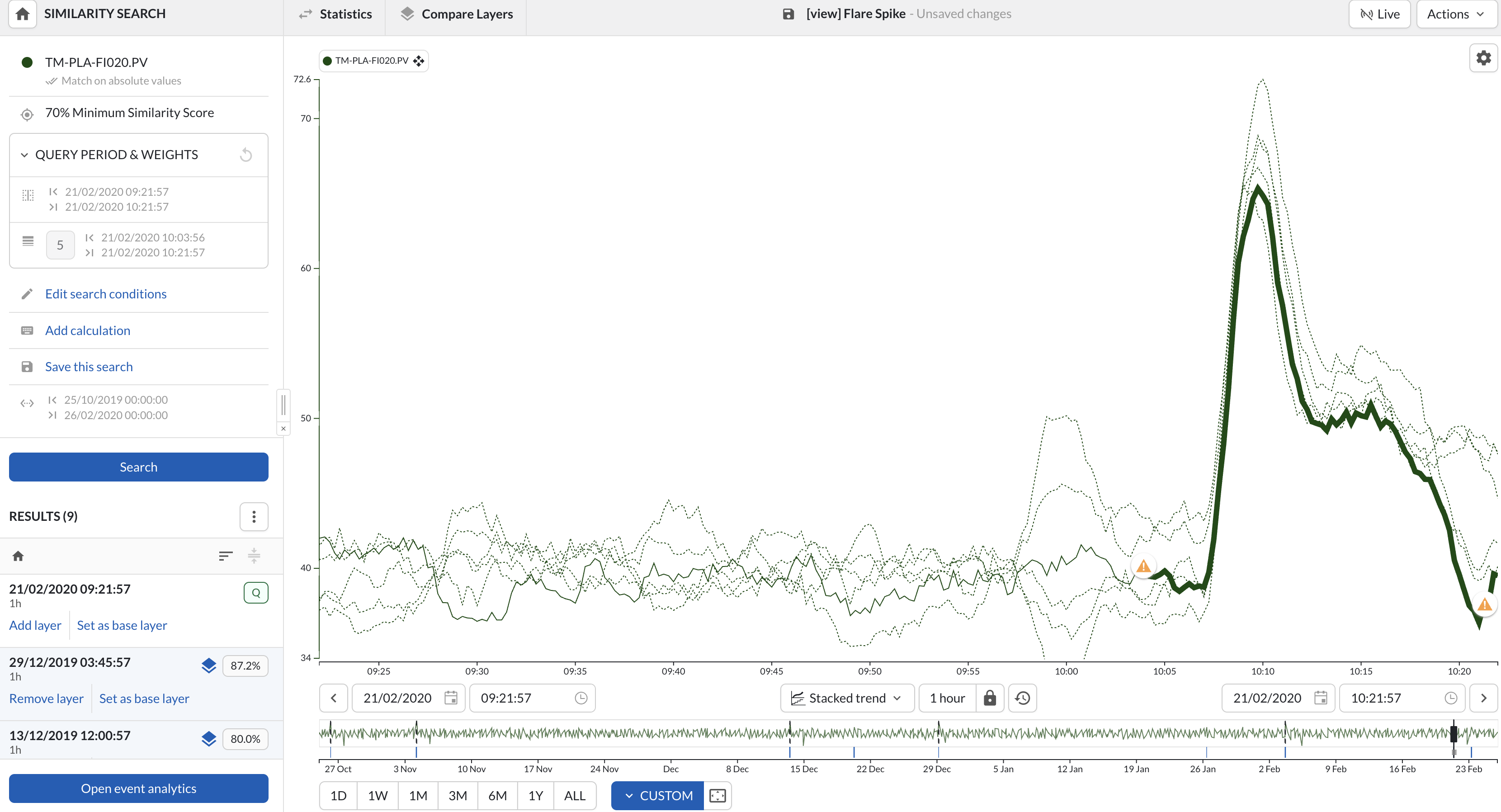
- Value-Based Searches identified peak load events
- Search results were saved as context items for traceability
- Monitors were configured to automatically detect future peaks and generate context events
- A dashboard was built to visualize all relevant information
For seasonal analysis:
- A global timeframe was defined in DashHub
- Monthly VBS calculations identified peak frequency patterns
- Nested logic formulas consolidated search conditions into a single detection signal
The Results
The Takeaway
By transforming short-term temperature fluctuations into structured operational insights, the team enabled proactive peak detection, improved energy dispatch efficiency, reduced unnecessary resource consumption, and established a scalable framework for load optimization across different operating profiles.
The Challenge
District heating operators observed short-term drops in outside temperature that triggered sudden peak mass-flow loads from the power plant. These peaks were unnecessary and inefficient because by the time the heat reached customers, ambient temperature had already risen again.
Without structured analysis, the team could not determine:
- When peak loads occurred most frequently during the year
- Whether peaks were driven by real demand or transient temperature fluctuations
- How often resources were over-allocated due to short-term weather effects
- How to proactively detect and prevent inefficient load spikes
The Approach
The team built a structured analytical workflow in TrendMiner to detect, contextualize, and monitor peak loads.
- Delta aggregations were created for outside temperature and mass flow
- A formula was developed to time-shift mass flow signals for alignment analysis
- Value-Based Searches identified peak load events
- Search results were saved as context items for traceability
- Monitors were configured to automatically detect future peaks and generate context events
- A dashboard was built to visualize all relevant information
For seasonal analysis:
- A global timeframe was defined in DashHub
- Monthly VBS calculations identified peak frequency patterns
- Nested logic formulas consolidated search conditions into a single detection signal
The Results
The Takeaway
By transforming short-term temperature fluctuations into structured operational insights, the team enabled proactive peak detection, improved energy dispatch efficiency, reduced unnecessary resource consumption, and established a scalable framework for load optimization across different operating profiles.
Access now
Share with a co-worker
The Challenge
District heating operators observed short-term drops in outside temperature that triggered sudden peak mass-flow loads from the power plant. These peaks were unnecessary and inefficient because by the time the heat reached customers, ambient temperature had already risen again.
Without structured analysis, the team could not determine:
- When peak loads occurred most frequently during the year
- Whether peaks were driven by real demand or transient temperature fluctuations
- How often resources were over-allocated due to short-term weather effects
- How to proactively detect and prevent inefficient load spikes
The Approach
The team built a structured analytical workflow in TrendMiner to detect, contextualize, and monitor peak loads.
- Delta aggregations were created for outside temperature and mass flow
- A formula was developed to time-shift mass flow signals for alignment analysis
- Value-Based Searches identified peak load events
- Search results were saved as context items for traceability
- Monitors were configured to automatically detect future peaks and generate context events
- A dashboard was built to visualize all relevant information
For seasonal analysis:
- A global timeframe was defined in DashHub
- Monthly VBS calculations identified peak frequency patterns
- Nested logic formulas consolidated search conditions into a single detection signal
The Results
The Takeaway
By transforming short-term temperature fluctuations into structured operational insights, the team enabled proactive peak detection, improved energy dispatch efficiency, reduced unnecessary resource consumption, and established a scalable framework for load optimization across different operating profiles.
Access now
Subscribe to our newsletter
Stay up to date with our latest news and updates.
Webinars on Demand
Press Play on Operational Improvement
.jpg)
.jpg)
.jpg)
Other Resources
Explore Our Newest Content to Maximize Your Operational Efficiency