Share with a co-worker
All Resources
Use case

The Challenge
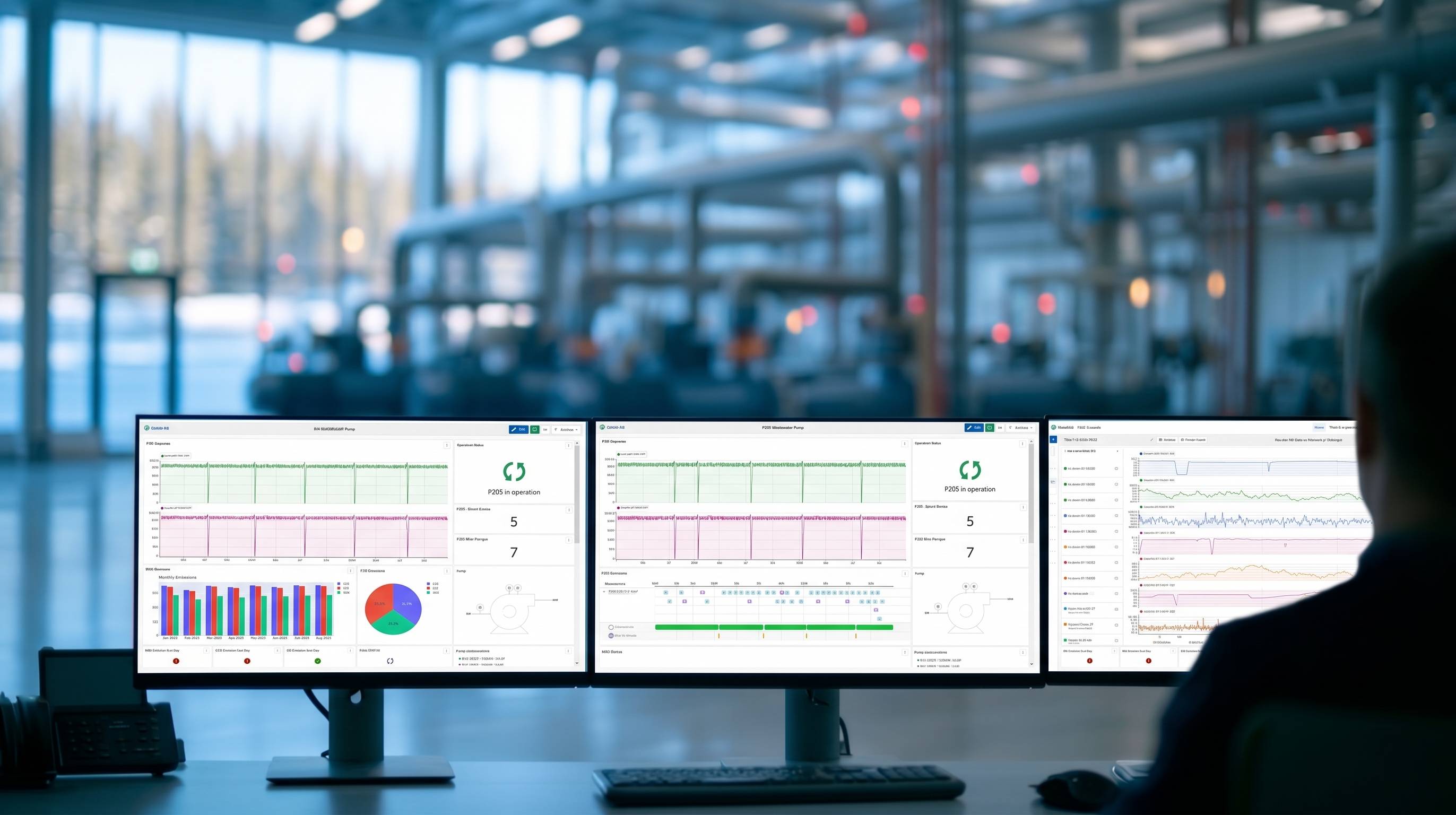
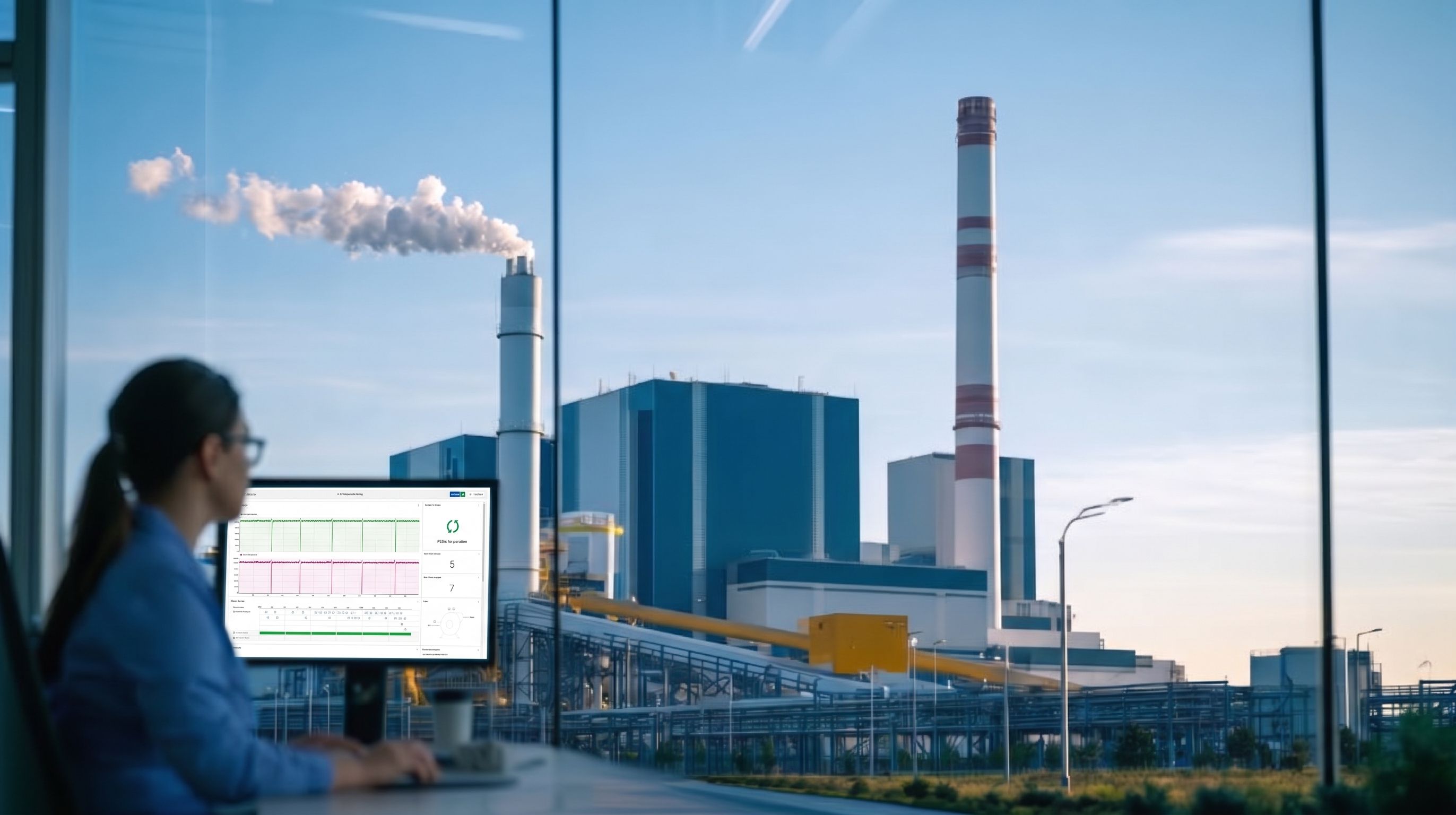
In a coal fired combined cycle process, absorber recirculation pumps play a critical role in controlling sulfur emissions by circulating gypsum through the reactor. Because multiple pumps operate in parallel, performance depends not only on individual pump condition but also on how many pumps are running simultaneously and under which process conditions.
Engineers needed to understand how pump configuration influenced emissions and efficiency, and whether operating with fewer pumps created hidden performance losses or environmental risks. The difficulty was that these effects were not obvious in standard trends, since emission levels, process load, and pump operation states changed continuously and simultaneously. Without structured analysis, comparing operating scenarios and quantifying performance differences was slow and uncertain.
The Approach
To systematically evaluate pump performance, engineers created a comparative analytics workflow focused on operating state segmentation and efficiency calculation:
- Used value based searches to isolate time periods corresponding to different pump combinations
- Compared periods when all pumps were running versus when one pump was offline
- Built a custom efficiency tag using calculated formulas to quantify pump performance under each scenario
- Leveraged statistical tables to evaluate performance across operating regimes
- Performed deeper analysis on deviating parameters to identify drivers behind efficiency differences
- Implemented monitoring logic to detect future deviations automatically
This approach transformed scattered operational data into structured, comparable performance scenarios.

The Results
The Takeaway
The analysis provided actionable visibility into how pump configuration affected both emissions control and process efficiency. By linking operating states with performance metrics, engineers gained a reliable basis for optimization decisions, improved process control, and proactive monitoring. The resulting insights supported OEE evaluation and contributed to a measured production increase of about 1.4 percent while strengthening environmental compliance confidence.
The Challenge
In a coal fired combined cycle process, absorber recirculation pumps play a critical role in controlling sulfur emissions by circulating gypsum through the reactor. Because multiple pumps operate in parallel, performance depends not only on individual pump condition but also on how many pumps are running simultaneously and under which process conditions.
Engineers needed to understand how pump configuration influenced emissions and efficiency, and whether operating with fewer pumps created hidden performance losses or environmental risks. The difficulty was that these effects were not obvious in standard trends, since emission levels, process load, and pump operation states changed continuously and simultaneously. Without structured analysis, comparing operating scenarios and quantifying performance differences was slow and uncertain.
The Approach
To systematically evaluate pump performance, engineers created a comparative analytics workflow focused on operating state segmentation and efficiency calculation:
- Used value based searches to isolate time periods corresponding to different pump combinations
- Compared periods when all pumps were running versus when one pump was offline
- Built a custom efficiency tag using calculated formulas to quantify pump performance under each scenario
- Leveraged statistical tables to evaluate performance across operating regimes
- Performed deeper analysis on deviating parameters to identify drivers behind efficiency differences
- Implemented monitoring logic to detect future deviations automatically
This approach transformed scattered operational data into structured, comparable performance scenarios.
The Results
The Takeaway
The analysis provided actionable visibility into how pump configuration affected both emissions control and process efficiency. By linking operating states with performance metrics, engineers gained a reliable basis for optimization decisions, improved process control, and proactive monitoring. The resulting insights supported OEE evaluation and contributed to a measured production increase of about 1.4 percent while strengthening environmental compliance confidence.
Access now
Share with a co-worker
The Challenge
In a coal fired combined cycle process, absorber recirculation pumps play a critical role in controlling sulfur emissions by circulating gypsum through the reactor. Because multiple pumps operate in parallel, performance depends not only on individual pump condition but also on how many pumps are running simultaneously and under which process conditions.
Engineers needed to understand how pump configuration influenced emissions and efficiency, and whether operating with fewer pumps created hidden performance losses or environmental risks. The difficulty was that these effects were not obvious in standard trends, since emission levels, process load, and pump operation states changed continuously and simultaneously. Without structured analysis, comparing operating scenarios and quantifying performance differences was slow and uncertain.
The Approach
To systematically evaluate pump performance, engineers created a comparative analytics workflow focused on operating state segmentation and efficiency calculation:
- Used value based searches to isolate time periods corresponding to different pump combinations
- Compared periods when all pumps were running versus when one pump was offline
- Built a custom efficiency tag using calculated formulas to quantify pump performance under each scenario
- Leveraged statistical tables to evaluate performance across operating regimes
- Performed deeper analysis on deviating parameters to identify drivers behind efficiency differences
- Implemented monitoring logic to detect future deviations automatically
This approach transformed scattered operational data into structured, comparable performance scenarios.
The Results
The Takeaway
The analysis provided actionable visibility into how pump configuration affected both emissions control and process efficiency. By linking operating states with performance metrics, engineers gained a reliable basis for optimization decisions, improved process control, and proactive monitoring. The resulting insights supported OEE evaluation and contributed to a measured production increase of about 1.4 percent while strengthening environmental compliance confidence.
Access now
Subscribe to our newsletter
Stay up to date with our latest news and updates.
Webinars on Demand
Press Play on Operational Improvement
.jpg)
.jpg)
.jpg)
Other Resources
Explore Our Newest Content to Maximize Your Operational Efficiency