Share with a co-worker


The Challenge
The facility operates multiple tanks that are continuously being filled and emptied, sometimes simultaneously. Three pumps support these operations, running individually or in parallel depending on demand. Flow and vibration levels are continuously monitored.
Unexpectedly, the team observed intermittent spikes in pump vibration, even when the number of active pumps and total flowrate remained constant. Traditional troubleshooting focused on mechanical or hydraulic causes, yet no clear fault was found. The pattern suggested that something external to the pump itself was influencing vibration behavior.
The turning point came when it was suspected that switching the tank undergoing filling or emptying might be contributing to these fluctuations.
- Intermittent vibration spikes without clear mechanical cause
- Constant flow and pump configuration during events
- No direct visibility into operational context of tank changes
- Difficulty linking vibration peaks to process behavior
The Approach
The team introduced operational context into the analysis by creating a dynamic tank state indicator.
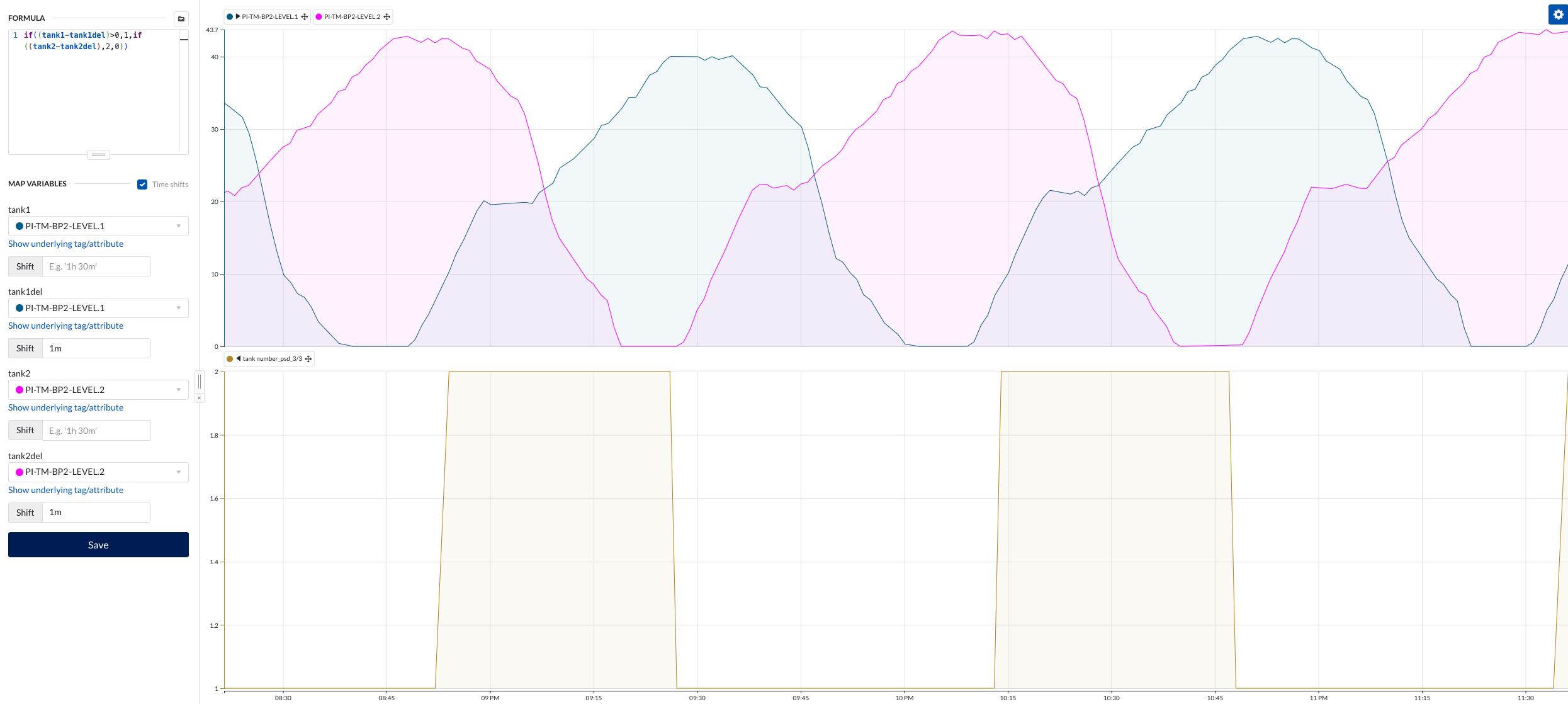
- Tank state tag creation: A calculated tag was developed to classify each tank as filling, emptying, or stable based on level differences
- Formula-based logic: The tag evaluated level changes to assign a value of 1 for filling, -1 for emptying, and 0 for stable conditions
- Context generation: A monitor was applied to automatically create context items whenever filling or emptying events occurred
- Correlation with vibration: Vibration spikes were analyzed against these contextual events to identify patterns
Key Insight
The vibration spikes were not random mechanical anomalies, they were linked to operational transitions in tank filling and emptying, which altered hydraulic conditions seen by the pumps.
Results
The Takeaway
By embedding process context into vibration analysis, the team transformed unexplained mechanical alarms into understandable operational responses, improving diagnostic accuracy, reducing unnecessary maintenance investigations, and strengthening collaboration between operations and reliability teams.
The Challenge
The facility operates multiple tanks that are continuously being filled and emptied, sometimes simultaneously. Three pumps support these operations, running individually or in parallel depending on demand. Flow and vibration levels are continuously monitored.
Unexpectedly, the team observed intermittent spikes in pump vibration, even when the number of active pumps and total flowrate remained constant. Traditional troubleshooting focused on mechanical or hydraulic causes, yet no clear fault was found. The pattern suggested that something external to the pump itself was influencing vibration behavior.
The turning point came when it was suspected that switching the tank undergoing filling or emptying might be contributing to these fluctuations.
- Intermittent vibration spikes without clear mechanical cause
- Constant flow and pump configuration during events
- No direct visibility into operational context of tank changes
- Difficulty linking vibration peaks to process behavior
The Approach
The team introduced operational context into the analysis by creating a dynamic tank state indicator.
- Tank state tag creation: A calculated tag was developed to classify each tank as filling, emptying, or stable based on level differences
- Formula-based logic: The tag evaluated level changes to assign a value of 1 for filling, -1 for emptying, and 0 for stable conditions
- Context generation: A monitor was applied to automatically create context items whenever filling or emptying events occurred
- Correlation with vibration: Vibration spikes were analyzed against these contextual events to identify patterns
Key Insight
The vibration spikes were not random mechanical anomalies, they were linked to operational transitions in tank filling and emptying, which altered hydraulic conditions seen by the pumps.
Results
The Takeaway
By embedding process context into vibration analysis, the team transformed unexplained mechanical alarms into understandable operational responses, improving diagnostic accuracy, reducing unnecessary maintenance investigations, and strengthening collaboration between operations and reliability teams.
Access now
Share with a co-worker
The Challenge
The facility operates multiple tanks that are continuously being filled and emptied, sometimes simultaneously. Three pumps support these operations, running individually or in parallel depending on demand. Flow and vibration levels are continuously monitored.
Unexpectedly, the team observed intermittent spikes in pump vibration, even when the number of active pumps and total flowrate remained constant. Traditional troubleshooting focused on mechanical or hydraulic causes, yet no clear fault was found. The pattern suggested that something external to the pump itself was influencing vibration behavior.
The turning point came when it was suspected that switching the tank undergoing filling or emptying might be contributing to these fluctuations.
- Intermittent vibration spikes without clear mechanical cause
- Constant flow and pump configuration during events
- No direct visibility into operational context of tank changes
- Difficulty linking vibration peaks to process behavior
The Approach
The team introduced operational context into the analysis by creating a dynamic tank state indicator.
- Tank state tag creation: A calculated tag was developed to classify each tank as filling, emptying, or stable based on level differences
- Formula-based logic: The tag evaluated level changes to assign a value of 1 for filling, -1 for emptying, and 0 for stable conditions
- Context generation: A monitor was applied to automatically create context items whenever filling or emptying events occurred
- Correlation with vibration: Vibration spikes were analyzed against these contextual events to identify patterns
Key Insight
The vibration spikes were not random mechanical anomalies, they were linked to operational transitions in tank filling and emptying, which altered hydraulic conditions seen by the pumps.
Results
The Takeaway
By embedding process context into vibration analysis, the team transformed unexplained mechanical alarms into understandable operational responses, improving diagnostic accuracy, reducing unnecessary maintenance investigations, and strengthening collaboration between operations and reliability teams.
Access now
Subscribe to our newsletter
Stay up to date with our latest news and updates.
Webinars on Demand
Press Play on Operational Improvement
.jpeg)
.jpeg)
.jpeg)
Other Resources
Explore Our Newest Content to Maximize Your Operational Efficiency