Share with a co-worker
All Resources
Use case


The Challenge
The bearing temperature of a furnace feed pump is expected to remain stable during normal operation. However, operators began observing short-duration temperature spikes that appeared intermittently and disappeared quickly. Because these anomalies were brief and irregular, they were difficult to investigate using conventional trend analysis.
The core difficulty was not just detecting the spikes, but identifying recurring patterns, understanding their root causes, and reacting before they could escalate into reliability or safety risks. Without automated detection, engineers had to manually inspect historical data, making the investigation slow, reactive, and potentially incomplete.
The Approach
Engineers implemented a pattern-driven monitoring strategy to systematically detect, analyze, and anticipate temperature anomalies:
- Visualized relevant process tags to isolate temperature behavior patterns
- Used pattern recognition searches to identify historical temperature spike events
- Overlaid similar events for visual and statistical comparison
- Activated monitoring to automatically detect similar anomalies in live data
- Applied historical data modeling to estimate likely future behavior
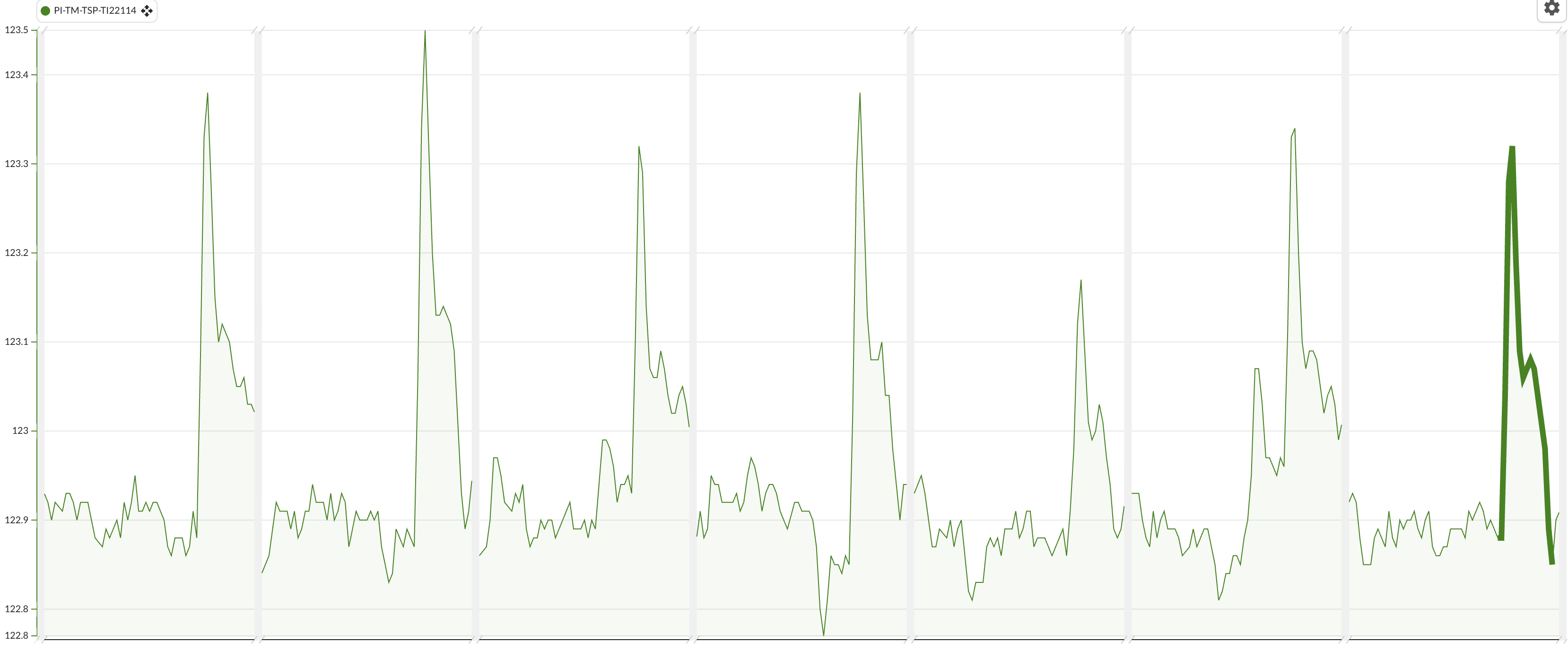
This methodology transformed isolated observations into structured, repeatable diagnostics.
The Results
The Takeaway
The solution enabled proactive temperature deviation monitoring, allowing engineers to detect abnormal operating conditions earlier and respond before they impact production. By automating anomaly recognition and comparison, the plant improved process visibility, reduced investigation time, and established a foundation for predictive diagnostics and preventive maintenance.
The Challenge
The bearing temperature of a furnace feed pump is expected to remain stable during normal operation. However, operators began observing short-duration temperature spikes that appeared intermittently and disappeared quickly. Because these anomalies were brief and irregular, they were difficult to investigate using conventional trend analysis.
The core difficulty was not just detecting the spikes, but identifying recurring patterns, understanding their root causes, and reacting before they could escalate into reliability or safety risks. Without automated detection, engineers had to manually inspect historical data, making the investigation slow, reactive, and potentially incomplete.
The Approach
Engineers implemented a pattern-driven monitoring strategy to systematically detect, analyze, and anticipate temperature anomalies:
- Visualized relevant process tags to isolate temperature behavior patterns
- Used pattern recognition searches to identify historical temperature spike events
- Overlaid similar events for visual and statistical comparison
- Activated monitoring to automatically detect similar anomalies in live data
- Applied historical data modeling to estimate likely future behavior
This methodology transformed isolated observations into structured, repeatable diagnostics.
The Results
The Takeaway
The solution enabled proactive temperature deviation monitoring, allowing engineers to detect abnormal operating conditions earlier and respond before they impact production. By automating anomaly recognition and comparison, the plant improved process visibility, reduced investigation time, and established a foundation for predictive diagnostics and preventive maintenance.
Access now
Share with a co-worker
The Challenge
The bearing temperature of a furnace feed pump is expected to remain stable during normal operation. However, operators began observing short-duration temperature spikes that appeared intermittently and disappeared quickly. Because these anomalies were brief and irregular, they were difficult to investigate using conventional trend analysis.
The core difficulty was not just detecting the spikes, but identifying recurring patterns, understanding their root causes, and reacting before they could escalate into reliability or safety risks. Without automated detection, engineers had to manually inspect historical data, making the investigation slow, reactive, and potentially incomplete.
The Approach
Engineers implemented a pattern-driven monitoring strategy to systematically detect, analyze, and anticipate temperature anomalies:
- Visualized relevant process tags to isolate temperature behavior patterns
- Used pattern recognition searches to identify historical temperature spike events
- Overlaid similar events for visual and statistical comparison
- Activated monitoring to automatically detect similar anomalies in live data
- Applied historical data modeling to estimate likely future behavior
This methodology transformed isolated observations into structured, repeatable diagnostics.
The Results
The Takeaway
The solution enabled proactive temperature deviation monitoring, allowing engineers to detect abnormal operating conditions earlier and respond before they impact production. By automating anomaly recognition and comparison, the plant improved process visibility, reduced investigation time, and established a foundation for predictive diagnostics and preventive maintenance.
Access now
Subscribe to our newsletter
Stay up to date with our latest news and updates.
Webinars on Demand
Press Play on Operational Improvement
.jpg)
.jpg)
.jpg)
Other Resources
Explore Our Newest Content to Maximize Your Operational Efficiency