Share with a co-worker

The Challenge
Thermal turbine startups can vary significantly depending on operating conditions, downtime and whether the unit starts from a cold or warm state. Frequent or inefficient startups can increase gas consumption, auxiliary energy use and overall operating costs.
Without consistent characterization, comparing startups and understanding their cumulative impact required significant manual analysis.
- Different startup conditions and profiles
- Frequent startups can increase operating costs
- Gas and auxiliary energy consumption difficult to compare
- Multiple parameters required for each startup
- Manual effort for recurring startup reporting
The Approach
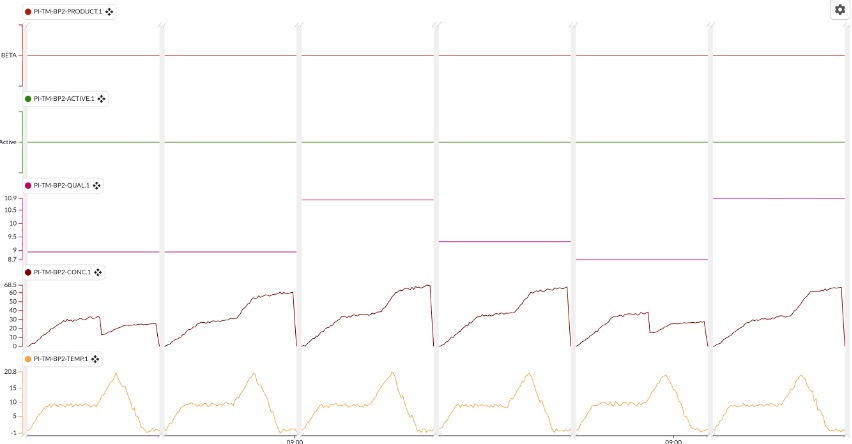
Engineers used TrendMiner searches, calculations and AI capabilities to automatically detect, characterize and compare turbine startups.
Event detection: Value-based searches automatically identified individual startup events
Startup characterization: Calculations on search results enriched each event with gas consumption, auxiliary energy, downtime, temperatures, pressures and maximum power
Event comparison: Context Items and Gantt views enabled historical comparison of startup conditions and performance
AI-assisted analysis: TrendMiner Agent and Routines aggregated startups by type and period, generating comparisons, charts and conclusions on consumption and operational impact
Key Insight
Turning every startup into a fully characterized event made it possible to compare startup behavior and identify the conditions driving higher consumption and operational losses.
Results
Value
TrendMiner transforms individual startups into a structured and comparable performance history, making it easier to quantify gas and energy consumption, identify costly startup patterns and reduce manual reporting. Combined with TrendMiner Agent and Routines, the analysis can scale across turbines to reveal opportunities for lower startup costs, reduced consumption and more efficient thermal plant operation.
The Challenge
Thermal turbine startups can vary significantly depending on operating conditions, downtime and whether the unit starts from a cold or warm state. Frequent or inefficient startups can increase gas consumption, auxiliary energy use and overall operating costs.
Without consistent characterization, comparing startups and understanding their cumulative impact required significant manual analysis.
- Different startup conditions and profiles
- Frequent startups can increase operating costs
- Gas and auxiliary energy consumption difficult to compare
- Multiple parameters required for each startup
- Manual effort for recurring startup reporting
The Approach
Engineers used TrendMiner searches, calculations and AI capabilities to automatically detect, characterize and compare turbine startups.
Event detection: Value-based searches automatically identified individual startup events
Startup characterization: Calculations on search results enriched each event with gas consumption, auxiliary energy, downtime, temperatures, pressures and maximum power
Event comparison: Context Items and Gantt views enabled historical comparison of startup conditions and performance
AI-assisted analysis: TrendMiner Agent and Routines aggregated startups by type and period, generating comparisons, charts and conclusions on consumption and operational impact
Key Insight
Turning every startup into a fully characterized event made it possible to compare startup behavior and identify the conditions driving higher consumption and operational losses.
Results
Value
TrendMiner transforms individual startups into a structured and comparable performance history, making it easier to quantify gas and energy consumption, identify costly startup patterns and reduce manual reporting. Combined with TrendMiner Agent and Routines, the analysis can scale across turbines to reveal opportunities for lower startup costs, reduced consumption and more efficient thermal plant operation.
Access now
Share with a co-worker
The Challenge
Thermal turbine startups can vary significantly depending on operating conditions, downtime and whether the unit starts from a cold or warm state. Frequent or inefficient startups can increase gas consumption, auxiliary energy use and overall operating costs.
Without consistent characterization, comparing startups and understanding their cumulative impact required significant manual analysis.
- Different startup conditions and profiles
- Frequent startups can increase operating costs
- Gas and auxiliary energy consumption difficult to compare
- Multiple parameters required for each startup
- Manual effort for recurring startup reporting
The Approach
Engineers used TrendMiner searches, calculations and AI capabilities to automatically detect, characterize and compare turbine startups.
Event detection: Value-based searches automatically identified individual startup events
Startup characterization: Calculations on search results enriched each event with gas consumption, auxiliary energy, downtime, temperatures, pressures and maximum power
Event comparison: Context Items and Gantt views enabled historical comparison of startup conditions and performance
AI-assisted analysis: TrendMiner Agent and Routines aggregated startups by type and period, generating comparisons, charts and conclusions on consumption and operational impact
Key Insight
Turning every startup into a fully characterized event made it possible to compare startup behavior and identify the conditions driving higher consumption and operational losses.
Results
Value
TrendMiner transforms individual startups into a structured and comparable performance history, making it easier to quantify gas and energy consumption, identify costly startup patterns and reduce manual reporting. Combined with TrendMiner Agent and Routines, the analysis can scale across turbines to reveal opportunities for lower startup costs, reduced consumption and more efficient thermal plant operation.
Access now
Subscribe to our newsletter
Stay up to date with our latest news and updates.
Webinars on Demand
Press Play on Operational Improvement
.jpeg)
.jpeg)
.jpeg)
Other Resources
Explore Our Newest Content to Maximize Your Operational Efficiency