Share with a co-worker

The Challenge
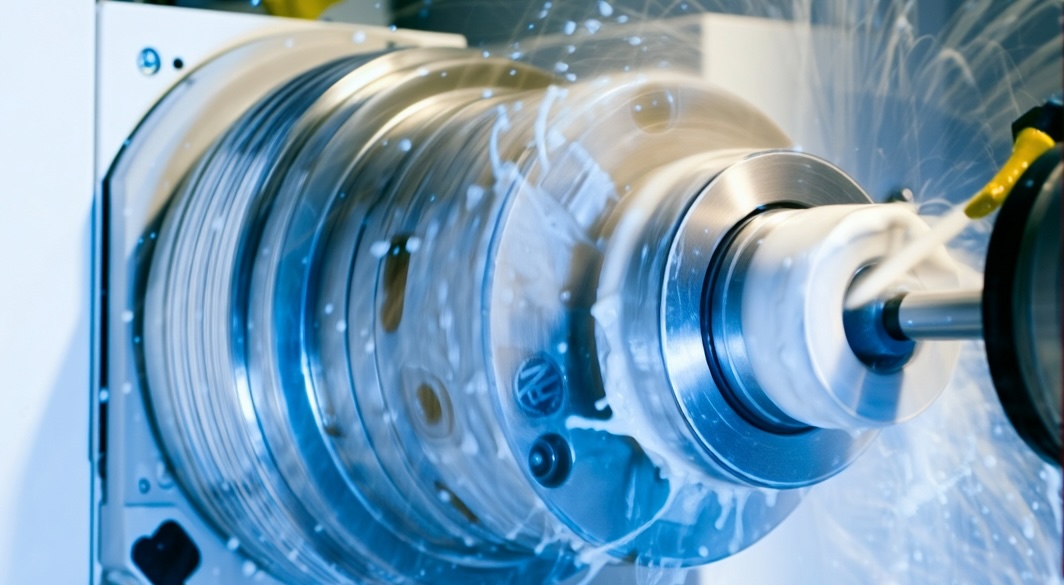
In discrete manufacturing, coolants and lubricants are used in processes like turning, milling, drilling and grinding. They cool and lubricate the cutting zone, reducing tool wear and preventing thermal damage to the workpiece. Coolants also flush away chips and provide corrosion protection. Their use enables higher speeds, longer tool life and improved surface quality.
In high-tech grinding operations, a central cooling lubrication system may supply multiple machines. If this system fails, all connected grinding machines are impacted, making high system availability critical. Stable temperature and pressure are key to consistent workpiece quality. Traditionally, monitoring relied on manual inspections and periodic checks by maintenance personnel, which limited responsiveness and risked undetected deviations.
The Approach
Using TrendMiner, a monitoring system for the central cooling lubrication system was implemented. Key process parameters such as lubrication temperature, system pressure and pump flow rate were visualized in a central dashboard. Automated alerts notify maintenance teams when thresholds are exceeded.
Due to the improved process insights gained from monitoring the system, several process optimizations have already been implemented:
- Seasonal temperature optimization: Analysis showed that the coolant temperature dropped too low during winter operation. The temperature setpoint was adjusted upward to stabilize process conditions and improve product quality.
- Root cause analysis of temperature spikes: Analysis showed that lubricant temperature could exceed target levels when fewer than the full set of grinding machines were drawing from the shared system. With only a subset of machines running, excess system pressure was absorbed by the pressure reducer and converted into heat — a system dynamic that hadn't previously been factored into the pressure setup.
- Optimized cleaning schedules: By monitoring the effluent tank and all connected grinding machines, maintenance teams can now plan the emptying of the tank precisely when needed, avoiding overflow issues and unnecessary manual checks.
The Results
- Condition monitoring and high system availability: Continuous insight into critical parameters ensures reliable operation of the central cooling lubrication system and uninterrupted production.
- Live alerts and downtime reduction: Early notifications within TrendMiner, via email or to third-party systems, enable rapid intervention — preventing faults and stabilizing temperature and pressure for consistent product quality.
- Optimized maintenance and cleaning planning: Improved transparency supports better scheduling of maintenance tasks and effluent-tank cleaning, reducing manual effort and avoiding unplanned downtime.
- Energy and asset efficiency: Adjusted pressure settings lead to energy savings and potential service life extension of the pumps.
- Improved collaboration: Shared dashboards and insights improve knowledge transfer between shopfloor teams and external maintenance providers.
The Takeaway
A central cooling lubrication system is a single point of failure for every grinding machine it feeds. Making its temperature, pressure and flow continuously visible turns periodic manual checks into live condition monitoring — and the same data quickly surfaces optimizations in setpoints, pressure settings and cleaning schedules that manual inspection would never reveal.
The Challenge
In discrete manufacturing, coolants and lubricants are used in processes like turning, milling, drilling and grinding. They cool and lubricate the cutting zone, reducing tool wear and preventing thermal damage to the workpiece. Coolants also flush away chips and provide corrosion protection. Their use enables higher speeds, longer tool life and improved surface quality.
In high-tech grinding operations, a central cooling lubrication system may supply multiple machines. If this system fails, all connected grinding machines are impacted, making high system availability critical. Stable temperature and pressure are key to consistent workpiece quality. Traditionally, monitoring relied on manual inspections and periodic checks by maintenance personnel, which limited responsiveness and risked undetected deviations.
The Approach
Using TrendMiner, a monitoring system for the central cooling lubrication system was implemented. Key process parameters such as lubrication temperature, system pressure and pump flow rate were visualized in a central dashboard. Automated alerts notify maintenance teams when thresholds are exceeded.
Due to the improved process insights gained from monitoring the system, several process optimizations have already been implemented:
- Seasonal temperature optimization: Analysis showed that the coolant temperature dropped too low during winter operation. The temperature setpoint was adjusted upward to stabilize process conditions and improve product quality.
- Root cause analysis of temperature spikes: Analysis showed that lubricant temperature could exceed target levels when fewer than the full set of grinding machines were drawing from the shared system. With only a subset of machines running, excess system pressure was absorbed by the pressure reducer and converted into heat — a system dynamic that hadn't previously been factored into the pressure setup.
- Optimized cleaning schedules: By monitoring the effluent tank and all connected grinding machines, maintenance teams can now plan the emptying of the tank precisely when needed, avoiding overflow issues and unnecessary manual checks.
The Results
- Condition monitoring and high system availability: Continuous insight into critical parameters ensures reliable operation of the central cooling lubrication system and uninterrupted production.
- Live alerts and downtime reduction: Early notifications within TrendMiner, via email or to third-party systems, enable rapid intervention — preventing faults and stabilizing temperature and pressure for consistent product quality.
- Optimized maintenance and cleaning planning: Improved transparency supports better scheduling of maintenance tasks and effluent-tank cleaning, reducing manual effort and avoiding unplanned downtime.
- Energy and asset efficiency: Adjusted pressure settings lead to energy savings and potential service life extension of the pumps.
- Improved collaboration: Shared dashboards and insights improve knowledge transfer between shopfloor teams and external maintenance providers.
The Takeaway
A central cooling lubrication system is a single point of failure for every grinding machine it feeds. Making its temperature, pressure and flow continuously visible turns periodic manual checks into live condition monitoring — and the same data quickly surfaces optimizations in setpoints, pressure settings and cleaning schedules that manual inspection would never reveal.
Access now
Share with a co-worker
The Challenge
In discrete manufacturing, coolants and lubricants are used in processes like turning, milling, drilling and grinding. They cool and lubricate the cutting zone, reducing tool wear and preventing thermal damage to the workpiece. Coolants also flush away chips and provide corrosion protection. Their use enables higher speeds, longer tool life and improved surface quality.
In high-tech grinding operations, a central cooling lubrication system may supply multiple machines. If this system fails, all connected grinding machines are impacted, making high system availability critical. Stable temperature and pressure are key to consistent workpiece quality. Traditionally, monitoring relied on manual inspections and periodic checks by maintenance personnel, which limited responsiveness and risked undetected deviations.
The Approach
Using TrendMiner, a monitoring system for the central cooling lubrication system was implemented. Key process parameters such as lubrication temperature, system pressure and pump flow rate were visualized in a central dashboard. Automated alerts notify maintenance teams when thresholds are exceeded.
Due to the improved process insights gained from monitoring the system, several process optimizations have already been implemented:
- Seasonal temperature optimization: Analysis showed that the coolant temperature dropped too low during winter operation. The temperature setpoint was adjusted upward to stabilize process conditions and improve product quality.
- Root cause analysis of temperature spikes: Analysis showed that lubricant temperature could exceed target levels when fewer than the full set of grinding machines were drawing from the shared system. With only a subset of machines running, excess system pressure was absorbed by the pressure reducer and converted into heat — a system dynamic that hadn't previously been factored into the pressure setup.
- Optimized cleaning schedules: By monitoring the effluent tank and all connected grinding machines, maintenance teams can now plan the emptying of the tank precisely when needed, avoiding overflow issues and unnecessary manual checks.
The Results
- Condition monitoring and high system availability: Continuous insight into critical parameters ensures reliable operation of the central cooling lubrication system and uninterrupted production.
- Live alerts and downtime reduction: Early notifications within TrendMiner, via email or to third-party systems, enable rapid intervention — preventing faults and stabilizing temperature and pressure for consistent product quality.
- Optimized maintenance and cleaning planning: Improved transparency supports better scheduling of maintenance tasks and effluent-tank cleaning, reducing manual effort and avoiding unplanned downtime.
- Energy and asset efficiency: Adjusted pressure settings lead to energy savings and potential service life extension of the pumps.
- Improved collaboration: Shared dashboards and insights improve knowledge transfer between shopfloor teams and external maintenance providers.
The Takeaway
A central cooling lubrication system is a single point of failure for every grinding machine it feeds. Making its temperature, pressure and flow continuously visible turns periodic manual checks into live condition monitoring — and the same data quickly surfaces optimizations in setpoints, pressure settings and cleaning schedules that manual inspection would never reveal.
Access now
Subscribe to our newsletter
Stay up to date with our latest news and updates.
Webinars on Demand
Press Play on Operational Improvement
No items found.
Other Resources
Explore Our Newest Content to Maximize Your Operational Efficiency