Share with a co-worker

The Challenge
Three different sulphur production assets, S4, S5, and S6, operate in parallel within the plant. At the end of each month, engineers needed to calculate how many hours each asset had been in specific operating states, fed with acid gas, fed with ammonia gas in S6, in stand by, or out of service.
This task was manual, time consuming, and prone to inconsistencies. Extracting the correct time windows and aggregating durations required significant effort, especially when analyzing specific periods of interest.
- Multiple operational statuses across three assets
- Manual effort to calculate hours per status
- Limited visibility into historical and current states
- Time intensive monthly reporting process
The Approach
The team built a structured and automated monitoring framework to centralize sulphur unit status tracking.
- Asset structure creation: A clear asset hierarchy was defined to represent sulphur production units
- Status detection logic: Value Based Searches were configured to identify all relevant operational statuses
- Automatic contextualization: Monitors were deployed to annotate past events and automatically detect and tag new ones
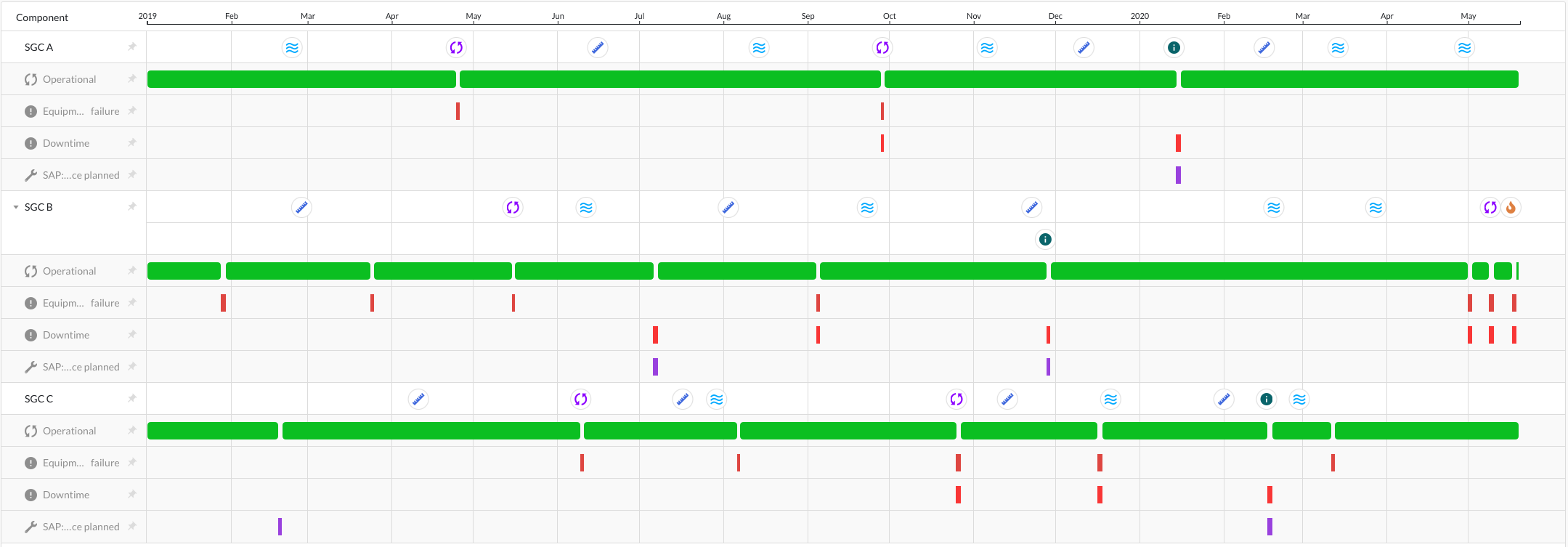
- Live Gantt visualization: A real time Gantt chart view was created with each asset displayed on a separate row for intuitive tracking
- Flexible analysis and export: Saved views allowed engineers to filter specific periods and export duration statistics with key variables
Key Insight
By structuring asset states and automating status detection, operational reporting shifted from manual reconstruction to instant visualization and quantification.
Results
The Takeaway
With automated status tracking and live visualization of sulphur production assets, engineers gained immediate clarity on operating patterns, drastically reduced reporting time, and ensured accurate monthly calculations, allowing them to focus on optimization rather than data compilation.
The Challenge
Three different sulphur production assets, S4, S5, and S6, operate in parallel within the plant. At the end of each month, engineers needed to calculate how many hours each asset had been in specific operating states, fed with acid gas, fed with ammonia gas in S6, in stand by, or out of service.
This task was manual, time consuming, and prone to inconsistencies. Extracting the correct time windows and aggregating durations required significant effort, especially when analyzing specific periods of interest.
- Multiple operational statuses across three assets
- Manual effort to calculate hours per status
- Limited visibility into historical and current states
- Time intensive monthly reporting process
The Approach
The team built a structured and automated monitoring framework to centralize sulphur unit status tracking.
- Asset structure creation: A clear asset hierarchy was defined to represent sulphur production units
- Status detection logic: Value Based Searches were configured to identify all relevant operational statuses
- Automatic contextualization: Monitors were deployed to annotate past events and automatically detect and tag new ones
- Live Gantt visualization: A real time Gantt chart view was created with each asset displayed on a separate row for intuitive tracking
- Flexible analysis and export: Saved views allowed engineers to filter specific periods and export duration statistics with key variables
Key Insight
By structuring asset states and automating status detection, operational reporting shifted from manual reconstruction to instant visualization and quantification.
Results
The Takeaway
With automated status tracking and live visualization of sulphur production assets, engineers gained immediate clarity on operating patterns, drastically reduced reporting time, and ensured accurate monthly calculations, allowing them to focus on optimization rather than data compilation.
Access now
Share with a co-worker
The Challenge
Three different sulphur production assets, S4, S5, and S6, operate in parallel within the plant. At the end of each month, engineers needed to calculate how many hours each asset had been in specific operating states, fed with acid gas, fed with ammonia gas in S6, in stand by, or out of service.
This task was manual, time consuming, and prone to inconsistencies. Extracting the correct time windows and aggregating durations required significant effort, especially when analyzing specific periods of interest.
- Multiple operational statuses across three assets
- Manual effort to calculate hours per status
- Limited visibility into historical and current states
- Time intensive monthly reporting process
The Approach
The team built a structured and automated monitoring framework to centralize sulphur unit status tracking.
- Asset structure creation: A clear asset hierarchy was defined to represent sulphur production units
- Status detection logic: Value Based Searches were configured to identify all relevant operational statuses
- Automatic contextualization: Monitors were deployed to annotate past events and automatically detect and tag new ones
- Live Gantt visualization: A real time Gantt chart view was created with each asset displayed on a separate row for intuitive tracking
- Flexible analysis and export: Saved views allowed engineers to filter specific periods and export duration statistics with key variables
Key Insight
By structuring asset states and automating status detection, operational reporting shifted from manual reconstruction to instant visualization and quantification.
Results
The Takeaway
With automated status tracking and live visualization of sulphur production assets, engineers gained immediate clarity on operating patterns, drastically reduced reporting time, and ensured accurate monthly calculations, allowing them to focus on optimization rather than data compilation.
Access now
Subscribe to our newsletter
Stay up to date with our latest news and updates.
Webinars on Demand
Press Play on Operational Improvement
.jpg)
.jpg)
.jpg)
Other Resources
Explore Our Newest Content to Maximize Your Operational Efficiency